Maintaining pristine water in swimming pools and hot tubs requires far more than visual clarity. Clear water can harbor microscopic pathogens, corrosive imbalances, or hazardous disinfection byproducts if underlying chemical parameters drift outside acceptable tolerances. Whether managing a high-turnover residential spa or a fifty-meter commercial swimming pool, implementing a disciplined, protocol-driven testing routine is the fundamental barrier against recreational water illnesses (RWIs), equipment destruction, and structural degradation.
Recreational water vessels represent dynamic closed-loop or semi-closed-loop environments. Elevated temperatures, user bather load, ultraviolet radiation, and organic contaminants continuously exert chemical pressure on sanitizers and buffers. Mastering water quality testing ensures that oxidizers remain active, water stays balanced according to mineral saturation indices, and bathers remain protected from dermatological, respiratory, and gastrointestinal hazards.
The Foundational Chemistry of Recreational Water
Recreational water sanitation relies on an interconnected balance of active disinfectants, pH regulators, alkalinity buffers, and mineral hardness. Treating each metric as an isolated variable frequently leads to chemical overcorrection, skin irritation, and premature mechanical wear on pumps, heat exchangers, and plaster finishes.
Free Chlorine, Combined Chlorine, and Total Chlorine
Chlorine remains the global benchmark for aquatic sanitation due to its dual capability as a potent sanitizer and a rapid oxidizer. When chlorine gas, sodium hypochlorite, or calcium hypochlorite is dissolved into water, it reacts to form hypochlorous acid (HOCl) and hypochlorite ions (OCl⁻). Hypochlorous acid serves as the primary germ-killing agent, neutralizing bacteria, viruses, and algae at rates up to eighty times faster than hypochlorite ions.
Testing protocols categorize chlorine into three distinct measurements:
- Free Available Chlorine (FAC): The unbonded hypochlorous acid and hypochlorite ions ready to neutralize organic material and pathogenic microorganisms. Residential pools should sustain 1.0 to 3.0 parts per million (ppm), whereas hot tubs require 3.0 to 5.0 ppm due to accelerated organic decomposition under higher temperatures.
- Combined Chlorine (Chloramines): Formed when free chlorine binds with nitrogenous waste, perspiration, urine, and cosmetic residues. Chloramines are responsible for the pungent “chemical pool smell,” ocular irritation, and compromised indoor air quality. Combined chlorine should never exceed 0.2 to 0.5 ppm.
- Total Chlorine: The aggregate mathematical sum of free available chlorine and combined chlorine. Testing both metrics allows operators to isolate chloramine concentration by subtracting free chlorine from total chlorine.
Bromine in High-Temperature Spas
While chlorine dominates swimming pools, bromine is widely favored in hot tubs and hydrotherapy spas. Bromine remains exceptionally stable at water temperatures exceeding 100°F (38°C) and operates efficiently across a broader pH spectrum. Unlike chloramines, bromamines retain significant sanitizing efficacy and produce minimal odor or ocular irritation. Hot tub operators should maintain active bromine levels between 3.0 and 6.0 ppm.
pH and the Hypochlorous Acid Equilibrium
The potential of hydrogen (pH) measures the logarithmic concentration of hydrogen ions in the water. For aquatic environments, the targeted operational range spans 7.2 to 7.8, with 7.4 to 7.6 representing the ideal baseline that mirrors human tear fluid (7.4).
When pH drifts above 7.8, hypochlorous acid dissociates rapidly into hypochlorite ions, plummeting chlorine disinfection efficacy to less than thirty percent of its peak capacity. Conversely, if pH falls below 7.2, the water turns corrosive, etching plaster walls, dissolving metallic heat exchanger coils, and triggering acute ocular and dermal burning in bathers.
Total Alkalinity: The Chemical Anchor
Total alkalinity (TA) quantifies the cumulative concentration of alkaline compounds—primarily carbonates, bicarbonates, and hydroxides—capable of neutralizing acids. Functioning as a chemical buffer, total alkalinity prevents volatile swings in pH, a phenomenon known as “pH bounce.” The recommended baseline is 80 to 120 ppm for standard chlorinated pools, or 100 to 150 ppm for systems utilizing acidic sanitizers like trichlor tablets.
Calcium Hardness and Mineral Saturation
Calcium hardness measures dissolved calcium mineral concentrations. Water possesses a natural equilibrium appetite: if it contains insufficient calcium (below 200 ppm in plaster pools), it leaches minerals directly from grouting, plaster, and pebble surfaces. Conversely, oversaturated water (exceeding 400 to 500 ppm) precipitates calcium carbonate onto filters, plumbing, and saltwater chlorinator cells as hard calcified scale.
Essential Testing Apparatus: From Test Strips to Photometers
Accurate field measurement depends heavily on selecting the correct testing methodology and understanding the inherent limitations of each analytical technique.
- Colorimetric Test Strips: Rapid chemical-impregnated paper pads that yield immediate qualitative feedback for free chlorine, total alkalinity, pH, and stabilizer levels. While convenient for daily spot checks, strips are vulnerable to human color-matching subjectivity, chemical bleachers from extreme sanitizer levels, and ambient moisture degradation.
- Liquid DPD and Phenol Red Drop Kits: The industry standard for residential and light-commercial field testing. Diethyl-p-phenylenediamine (DPD) reagents produce a distinct pink hue directly proportional to chlorine or bromine presence, while phenol red indicators gauge pH. Advanced titration kits utilizing FAS-DPD (ferrous ammonium sulfate) eliminate visual shade comparison by converting samples from pink to clear through titrant drop counting, providing precision down to 0.2 ppm.
- Digital Photometers and Spectrophotometers: Commercial-grade instruments that pass specific wavelengths of light through a vial containing reacted reagents. A photosensor reads the light transmission, outputting digital readings that eradicate ambient lighting bias and operator visual fatigue.
Systematic Testing Frequency for Pools and Spas
Establishing an uncompromising schedule ensures chemical trends are caught before water turns cloudy, biological growth takes root, or mechanical components suffer chemical attack.
- Daily Testing: Free available chlorine, total chlorine, and pH must be recorded every morning before bather entry, and re-evaluated during peak operational hours in commercial installations. Hot tubs should always be tested immediately prior to use and after prolonged soaking sessions.
- Twice-Weekly Testing: Total alkalinity and bather-driven chloramine accumulation require structured verification twice a week to maintain buffer stability.
- Monthly Testing: Calcium hardness, cyanuric acid (CYA stabilizer), and total dissolved solids (TDS) warrant monthly laboratory or advanced titration evaluation. High-temperature hot tubs should be tested for TDS monthly as a baseline metric to dictate scheduled draining and refilling cycles.
Hot Tub Peculiarities: Temperature, Aeration, and Organic Loads
A hot tub cannot simply be treated as a miniature swimming pool. The ratio of human surface area to water volume is dramatically concentrated: four bathers in an eight-hundred-gallon spa exert a biological load comparable to dozens of swimmers in an average residential pool. Body oils, sweat, cosmetics, and dead skin cells overwhelm sanitizers rapidly at elevated temperatures.
Furthermore, hydrotherapy jets introduce violent aeration. Vigorous bubbling accelerates outgassing of dissolved carbon dioxide ($CO_2$), causing hot tub pH to escalate sharply even when sanitizers appear within target parameters. To review broader municipal treatment considerations and related insights, readers can browse through our water quality blog articles covering chemical sanitation dynamics.
Hot tub filtration systems also operate under higher thermal stress, making regular filter degreasing essential. When biological matter bypasses clogged filter media, it combines with hot water to cultivate tenacious bacterial colonies. If you are experiencing persistent water balance anomalies or complex system failures, do not hesitate to contact our water specialists for diagnostic support.
Diagnostic Water Quality Parameters and Action Thresholds
The following baseline matrix establishes operational parameters for standard residential pools and residential hot tubs:
- Free Chlorine: Pools: 1.0–3.0 ppm; Spas: 3.0–5.0 ppm. Action required if below 1.0 ppm (shock dosing) or above 10.0 ppm (neutralize/air-out).
- Total Bromine: Spas: 3.0–6.0 ppm. Action required if below 2.0 ppm.
- pH: 7.2–7.8 (Target: 7.4–7.6). Action required if below 7.0 (add sodium carbonate) or above 8.0 (add muriatic acid or sodium bisulfate).
- Total Alkalinity: 80–120 ppm (cal-hypo/liquid chlorine) or 100–150 ppm (trichlor). Action required if below 80 ppm (add sodium bicarbonate).
- Calcium Hardness: 200–400 ppm for plaster; 150–250 ppm for vinyl/fiberglass. Action required if below 150 ppm (add calcium chloride).
- Cyanuric Acid (CYA): Pools: 30–50 ppm (outdoor only; avoid in indoor pools and enclosed spas). Action required if above 80 ppm (partial drain and refill).
- Combined Chlorine: Must remain under 0.2 ppm. Action required if 0.5 ppm or higher (breakpoint chlorination required).
Source Water Verification and Contaminant Screening
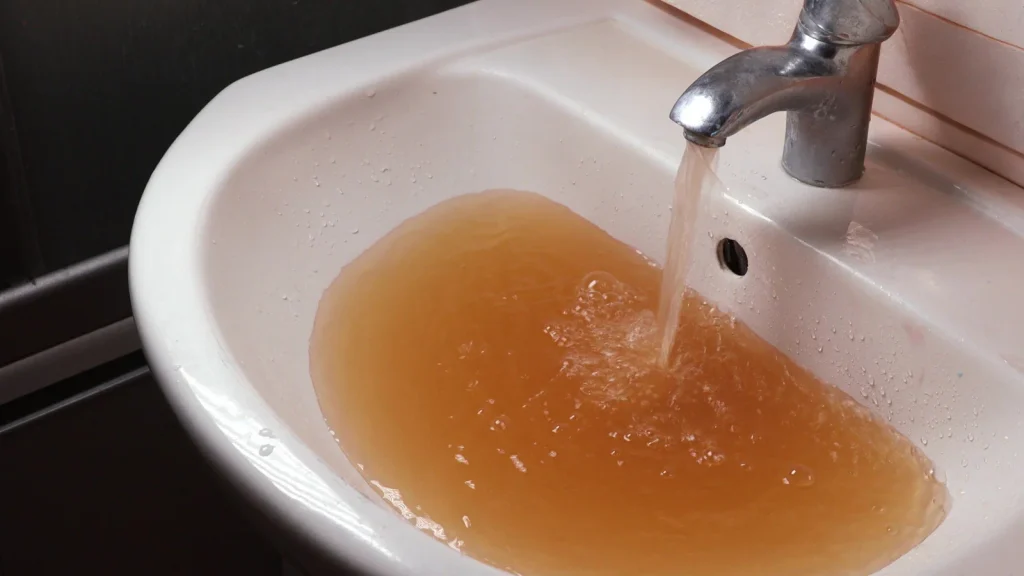
Many chronic pool and spa issues originate not from bather waste, but from the primary source water used during initial filling or evaporation top-offs. Municipal tap water and private wells introduce varying baselines of minerals, heavy metals, and pipe-leached contaminants. For instance, facility managers evaluating water quality in older buildings often discover elevated copper, iron, or zinc from legacy plumbing components, which can stain acrylic shells, tint pool water green, or interfere with chemical oxidation reactions.
In dense metropolitan settings where older distribution mains are common, homeowners frequently seek out an environmental technician who tests water for lead in Queens neighborhoods before filling high-volume domestic water systems or relying on untreated tap connections for recreational vessels. Reviewing our comprehensive water testing and safety FAQ provides additional clarity regarding chemical cross-contamination risks and domestic filtration benchmarks.
Source water quality touches broader public health paradigms that extend beyond surface recreation. Facility managers should consult the MedlinePlus consumer guide on drinking water health to understand domestic exposure pathways and basic chemical standards. Similarly, environmental managers monitoring emerging municipal contaminants should review the ATSDR clinical and environmental PFAS guidance regarding persistent fluorinated compounds, and review curated drinking water safety resources to ensure their source water feeds meet rigorous public health safety baselines.
Pathogen Control and Recreational Water Illnesses (RWIs)
Water testing is, above all, an infection prevention safeguard. Inadequately sanitized water serves as a vector for pathogenic bacteria, viruses, and protozoa that thrive in moist, warm aquatic systems.
Pseudomonas aeruginosa and Hot Tub Folliculitis
Pseudomonas aeruginosa is a ubiquitous gram-negative bacterium capable of surviving within wet biofilm matrices on spa walls, piping, and filter grids. When sanitizer levels lapse in hot tubs, the organism causes hot tub folliculitis, an uncomfortable pustular skin rash, as well as severe external ear infections (otitis externa). Regular sanitization combined with biofilm-purging detergents prevents colonization.
Legionella pneumophila
Legionella species proliferate in warm water environments between 68°F and 113°F (20°C–45°C), conditions epitomized by hydrotherapy tubs. The bacteria become aerosolized when spa jets and aeration rings create fine mists, which can then be inhaled into pulmonary pathways. Maintaining continuous, uninterrupted oxidizer residuals and executing routine hyperchlorination procedures remain non-negotiable operational requirements.
Cryptosporidium and Breakpoint Chlorination
Cryptosporidium is a protozoan parasite protected by an outer protective oocyst shell that resists standard free chlorine concentrations for up to ten days. In cases of confirmed or suspected diarrheal fecal contamination, swimming pool operators must execute breakpoint chlorination, elevating free chlorine to 20 ppm for 12.75 hours (or equivalent contact-time values) to achieve complete oocyst inactivation before reopening.
Best Practices for Sample Collection and Testing Integrity
Even the most sophisticated photometric instrumentation will produce flawed data if the sample collection methodology is defective. Field technicians must adhere strictly to established collection protocols:
- Sampling Location: Always retrieve water samples midway between the shallow and deep ends, away from surface skimmer inlets, return jets, and chemical chemical-dispensing floaters.
- Elbow-Depth Technique: Invert the sample vial completely, submerge it eighteen inches beneath the water surface (roughly elbow depth), and rotate the opening upward to capture water representative of the bulk vessel rather than surface tension film.
- Immediate Processing: Analyze chemical parameters immediately upon collection. Exposure to atmospheric oxygen, direct sunlight, and container temperature changes alters dissolved gas equilibrium and free chlorine concentrations within minutes.
- Reagent Expiration and Storage: Liquid reagents and test strips degrade rapidly under heat, humidity, and UV radiation. Store all testing apparatus in a climate-controlled environment, keep bottles sealed between drops, and discard reagents beyond their stated expiration dates.
Managing Water Balance and Long-Term Stability
Consistent, rigorous water testing transforms pool and hot tub maintenance from an unpredictable cycle of corrective firefighting into a controlled, predictable regimen. By routinely measuring free chlorine, monitoring chloramine formation, managing pH equilibrium, and accounting for source water variables, pool and spa owners preserve hydraulic equipment and provide an uncompromised, hygienic aquatic sanctuary for all bathers.