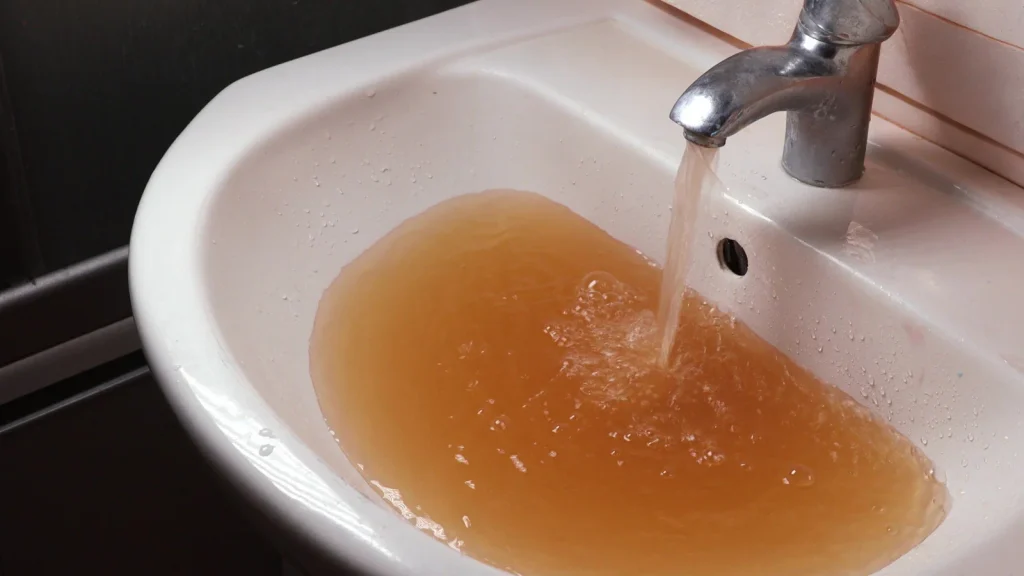
Few household sights evoke faster concern than opening a faucet and watching tinted fluid pour into a clean sink. Water should emerge clear, crisp, and neutral. When it appears yellow, orange, or deep reddish-brown, your plumbing system is broadcasting a specific geochemical message. Discoloration represents dissolved ions, suspended colloidal matter, or oxidized mineral precipitates that have altered the water’s optical properties.
Diagnosing these chromatic shifts requires understanding how plumbing materials interact with oxidizers, municipal treatment additives, and natural groundwater chemistry. The Water Quality Journal regularly tracks domestic distribution dynamics, where mechanical pressure shocks or changing source chemistry trigger sudden aesthetic transformations. By analyzing the precise hue, timing, and source fixtures involved, homeowners can decipher what their tap is signaling and take targeted remediation measures.
The Physics and Chemistry Behind Discolored Tap Water
Water discoloration stems primarily from chromophores: chemical groups or particulate matrices that absorb specific wavelengths of visible light while transmitting others. In domestic water infrastructure, these chromophores are almost exclusively metallic compounds, humic fractions, or bacterial biofilms. When groundwater passes through subterranean rock formations, or when treated surface water sits inside municipal mains, chemical equilibrium dictates whether metals remain dissolved in invisible ionic forms or precipitate out into noticeable colors.
Oxidation-reduction potential (ORP) and pH serve as the primary chemical switches governing this behavior. In low-oxygen or acidic conditions, metals like iron and manganese remain dissolved in a reduced state (ferrous iron, Fe2+, and manganous ion, Mn2+), producing virtually transparent water. Once this water meets atmospheric oxygen at your aerator, or contacts chlorine and chloramines introduced during municipal disinfection, those soluble ions rapidly oxidize into insoluble trivalent species (ferric iron, Fe3+). These insoluble species aggregate into colloidal suspensions that scatter light, shifting water appearance from pale straw yellow to dark, muddy brown.
Hydraulic dynamics also dictate when these suspended materials appear. Water utility systems maintain a delicate biofilm and mineral scale lining along the interior of transmission mains. When firefighters pull from hydrants, construction crews open valves, or water departments perform scheduled bidirectional flushing, the sudden surge in flow velocity strips this protective mineral scale from pipe walls, sending slugs of concentrated particulate downstream to residential meters.
Decoding the Palette: What Yellow, Orange, and Brown Indicate
While people often lump all warm-toned water discoloration under the broad label of “rust,” each shade occupies a distinct position on the geochemical oxidation spectrum. Identifying the exact tone provides critical clues about the contaminant source, its concentration, and where in the distribution system the breakdown occurred.
1. Yellow Tap Water: Dilute Inorganics, Humic Acids, and Pipe Leaching
Yellow tap water generally indicates one of three common chemical phenomena: trace iron concentrations, organic plant decomposition products, or chemical leaching from resin tanks:
- Low-Concentration Ferric Iron: Trace concentrations of oxidized iron, typically between 0.3 and 1.5 milligrams per liter (mg/L), impart a pale yellow or champagne-tinted cast without forming heavy grit. At these levels, the iron particles remain small enough to stay uniformly suspended rather than immediately settling to the bottom of a glass.
- Tannins and Humic Substances: In private well systems, persistent pale yellow to tea-colored water frequently points to tannins. These natural organic compounds leach into shallow aquifers as rainwater filters through peat, decaying leaves, and rich soil layers. Tannins do not settle out over time and pass unaffected through standard sediment filtration cartridges.
- Water Softener Resin Degradation: If a pale amber or yellowish cast appears suddenly alongside tiny translucent beads, the ion-exchange resin bed within a whole-house water softener may have ruptured, allowing sulfonated polystyrene divinylbenzene beads and degraded polymer fragments into the plumbing lines.
2. Orange Tap Water: Intermediate Oxidation and Active Internal Corrosion
Orange tap water indicates an active, intermediate phase of iron oxidation. This coloration occurs when ferrous ions transition to ferric hydroxide complexes, such as Fe(OH)3 and lepidocrocite (gamma-FeOOH). This distinct bright orange or pumpkin hue reflects fresh, active corrosion rather than ancient sediment layers.
When municipal systems switch coagulants or alter pH balances, the protective passivation layer inside older unlined ductile iron or galvanized piping can destabilize. The resulting galvanic activity creates loose, flaky iron oxyhydroxide scales that suspend easily under standard household flow velocities. Orange water frequently stains porcelain sinks, acrylic bathtubs, and light-colored laundry, binding tenaciously to cotton and synthetic fibers.
3. Brown and Dark Red Water: Dense Ferric Oxides and Manganese Precipitation
Deep brown, reddish-brown, or dark tea-colored water signals heavy concentrations of settled mineral oxides that have undergone complete oxidation. This shade is dominated by hematite (Fe2O3) and goethite (alpha-FeOOH), often combined with insoluble manganese dioxide (MnO2):
- High-Mass Hydraulic Disturbance: Dark brown water that appears abruptly across all fixtures is almost always the result of a physical shock to the municipal distribution network or well casing. Water main breaks, municipal pressure drops, or local fire hydrant usage generate scouring velocities that tear mature mineral crusts free from main walls.
- Manganese Synergy: When water displays a murky, dark brown or near-black coloration, manganese is usually present alongside iron. While iron alone produces reddish tones, even minute concentrations of manganese (above 0.05 mg/L) oxidize into dark brown or pitch-black particulates that create an oily sheen on the surface.
- Localized Pipe Decay: If the deep brown coloration occurs exclusively at a single fixture or only when the tap is first opened in the morning, aging galvanized iron pipes inside the home’s walls are actively deteriorating from within.
The Diagnostic Flowchart: Isolating the Discoloration Source
Pinpointing whether discolored water originates inside your home or outside in the utility main requires a systematic diagnostic approach. Walking through the following diagnostic steps eliminates guesswork before you purchase costly filtration hardware or call a contractor:
- Cold-Water Isolation Test: Run cold water from a bypass valve or outdoor spigot closest to your water meter or well pressure tank for two to three minutes. If the water runs pristine and clear, your incoming municipal or well supply is clean. The source of discoloration resides within your internal plumbing lines or hot water heating unit.
- Hot Water vs. Cold Water Comparison: Fill two clear glass containers: one from the cold tap and one from the hot tap. If the cold sample is crystal clear while the hot sample exhibits yellow or rusty brown tones, your water heater is the culprit. Sacrificial anode rods, typically made of magnesium or aluminum, eventually corrode away entirely, leaving the steel tank lining exposed to aggressive electrochemical oxidation.
- Fixture-Specific Mapping: Test every faucet across the home. If discoloration appears isolated to an upstairs bathroom or an infrequently used basement utility sink, local galvanized branch lines are sloughing off internal rust. If every fixture delivers discolored water simultaneously on cold lines, the issue originates from the municipal delivery main or the well casing itself.
- The White Paper Sediment Test: Pour a water sample through a clean white paper coffee filter. If particles collect on the paper while the liquid passes through clear, the discoloration is caused by particulate ferric iron that can be resolved with mechanical sediment filtration. If the filtered liquid remains yellow or light brown, the chromophores are dissolved tannins or microscopic colloidal complexes that require chemical oxidation or specialized ion-exchange media.
Health Considerations, Secondary Standards, and Hidden Contaminants
Under the Environmental Protection Agency (EPA) National Secondary Drinking Water Regulations, iron and manganese are classified as secondary contaminants. The EPA sets secondary maximum contaminant levels (SMCLs) at 0.3 mg/L for iron and 0.05 mg/L for manganese. These secondary thresholds address aesthetic concerns, including staining, unpleasant metallic tastes, and pipe scaling, rather than acute toxicity.
However, aesthetic discoloration should never be treated as purely cosmetic without thorough testing. The same galvanic corrosion that strips iron from piping can simultaneously liberate far more hazardous heavy metals into your drinking glass. When internal pipe scales destabilize, legacy plumbing components—such as lead service lines, lead-soldered copper joints, and brass fixtures—can leach toxic ions alongside rust particles. Anyone dealing with recurrent discoloration in older housing stock should review NIEHS research on lead toxicity and plumbing to understand how corrosion dynamics compromise neurological health.
For properties built prior to modern plumbing codes, evaluating lead mobilization alongside rust flakes is essential. Property owners frequently seek lead testing for drinking water in Brooklyn brownstones and similar historic urban properties, where century-old unlined service lines interact with fluctuating municipal corrosion-inhibitor dosages. In these aging distribution settings, an aesthetic iron flare-up often coincides with elevated lead spikes that remain completely invisible to the naked eye.
Groundwater sources face distinct hazards. Mineral-rich aquifers often contain co-occurring geogenic contaminants that hitchhike alongside iron-bearing strata. Familiarizing yourself with NIEHS environmental health data on arsenic reveals how naturally occurring arsenic species readily bind to iron oxyhydroxides in subsurface bedrock. When aquifer redox conditions shift, both iron and arsenic can mobilize into private well water simultaneously. Reviewing an NIEHS overview of environmental water pollutants provides valuable context on how industrial runoff, natural minerals, and microbiological agents interact inside unmonitored private water supplies.
Evaluating Your Discolored Water: Practical Solutions and Remediation
Treating discolored water depends entirely on whether the issue is temporary or systemic, and whether you receive water from a regulated public utility or a private residential well.
Temporary Municipal Flushing and Water Main Events
If your discoloration stems from municipal main maintenance, hydrant testing, or a localized water main repair, the fix is straightforward. Do not run hot water taps while the utility works, as drawing rust-laden water will pack sediment into the base of your hot water tank. Wait until the utility announces repairs are complete, then locate your lowest, unsoftened cold water fixture—typically an outdoor hose bib or a utility sink—and run it at full force for 15 to 20 minutes until the discharge runs transparent.
Addressing Internal Plumbing and Water Heater Degradation
When tests demonstrate that discoloration originates inside your own plumbing envelope, explore these mechanical and systemic interventions:
- Water Heater Flush and Anode Replacement: If discoloration is restricted to hot water lines, perform a complete drain and power-flush of your water heater storage tank to clear accumulated sediment. Inspect the sacrificial anode rod. If the core wire is exposed or heavily degraded, install a new magnesium or powered titanium anode to prevent the tank walls from rusting through.
- Repiping Corroded Lines: Homes constructed prior to the 1960s often retain galvanized steel piping. As zinc coatings degrade, bare steel rusts from the inside out, restricting flow diameter and perpetually releasing iron into the water stream. The definitive long-term solution involves replacing these branches with modern copper or PEX tubing.
- Sediment Pre-Filtration: For recurring particulate rust entering from municipal connections, install a whole-house 5-micron spun polypropylene or pleated sediment filter directly downstream of your main shutoff valve.
Targeted Well Water Remediation Technologies
Private well owners confronting persistent yellow or brown water must select water treatment systems tailored to their specific water chemistry profile:
- Catalytic Oxidation Filters: For moderate to high concentrations of dissolved ferrous iron and manganese, specialized media filters (such as Katalox Light, Birm, or manganese greensand) introduce oxygen or utilize chemical oxidation to force metals out of solution, trapping the resulting particulate within a backwashing filter bed.
- Specialized Tannin Ion-Exchange Systems: If persistent yellow water is confirmed to be organic tannins, standard sediment filters and conventional water softeners will fail. Homeowners must deploy specialized macroporous anion-exchange resin systems regenerated with common sodium chloride brine.
- Chlorination and Contact Tanks: When private wells suffer from iron bacteria—microorganisms that metabolize dissolved iron and generate a stringy, foul-smelling orange sludge—continuous chemical injection using sodium hypochlorite or hydrogen peroxide followed by a retention tank and carbon filtration is necessary to eliminate the bio-sludge.
Taking Control of Your Household Tap Water Quality
Discolored tap water should never be dismissed as an unavoidable inconvenience. Whether it takes the form of a faint yellow tint caused by natural tannins, an aggressive orange wash from destabilized distribution mains, or heavy brown rust flakes originating within aging residential branch lines, your water’s color provides an actionable profile of system health.
Before investing in expensive whole-house filtration equipment, conduct clear-glass tests on both hot and cold lines, survey neighbors to establish geographic scope, and test your water through an accredited, state-certified laboratory. For deeper background on drinking water standards, treatment configurations, and filtration mechanics, explore our comprehensive water quality fundamentals guide, or consult our broader catalog of drinking water safety resources. If you have completed testing and require personalized technical guidance to resolve complex mineral precipitation or corrosion challenges, please contact our water specialists to help interpret your laboratory assays and protect your household water infrastructure.