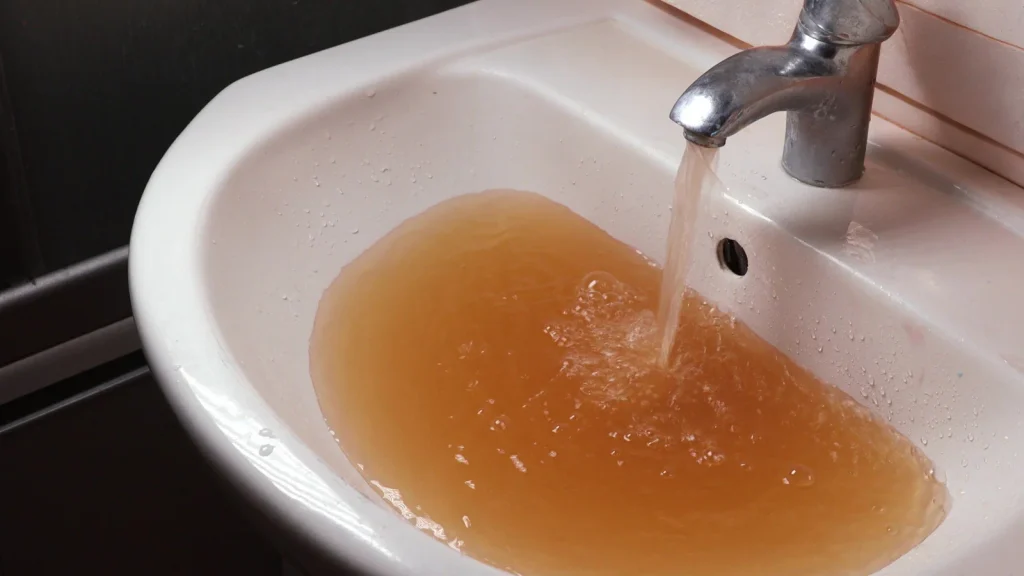
You cannot see most water quality problems, but your building can still give you clues. These five are worth paying attention to.
1. The building was built before 1986. Older buildings may contain lead service lines, lead solder or older brass fixtures. Age alone does not mean there is a problem, but it is the single biggest reason to ask.
2. Water is discolored after construction. Brown or orange water after nearby work usually means sediment has been disturbed. It often clears with flushing, but the same disturbance can release particles that contain lead.
3. One tap behaves differently. If only one faucet has an odd taste, low pressure or discoloration, the cause is usually local to that fixture or the pipe behind it.
4. Hot water smells or looks wrong. A rotten-egg smell or rusty color that appears only in hot water often points to the water heater rather than the water supply.
5. Parts of the building sit unused. Vacant apartments and rarely used bathrooms let water sit still for long periods, which can raise metal levels and allow bacteria to grow.
If any of these apply, start by asking your building manager or utility what they know about your service line and plumbing. If questions remain, testing your own tap will give you a clear answer.