In the architectural anatomy of a high-rise apartment building or a sprawling office complex, the hot water system is often designed as a centralized “heart” with a vast network of “veins.” These shared heating loops are marvels of engineering, designed to provide near-instant hot water to hundreds of residents simultaneously. By constantly circulating water from a central boiler through a continuous loop and back again, developers can minimize wait times and reduce water waste. However, as these buildings age and occupancy patterns shift, a troubling trend is emerging in laboratory data: the water quality in a shared loop is rarely uniform.
While the resident in Apartment 2A might enjoy pristine, well-disinfected hot water, their neighbor in 12F—connected to the exact same loop—might be drawing water that is biologically compromised or chemically aggressive. This “unevenness” is not a random occurrence; it is a predictable result of how heat, distance, and stagnation interact within a closed-loop system. Understanding these gradients is essential for property managers and residents who want to move beyond the assumption that a single building-wide test represents the reality of every tap.
The Thermodynamics of Disinfectant Decay
The primary reason for uneven water quality in a shared loop is the relationship between temperature and chemical stability. Most municipal water is treated with chlorine or chloramines to prevent bacterial regrowth. These disinfectants are highly sensitive to heat. As water leaves the central boiler and begins its journey through the building, it is at its hottest point.
As the water travels further away from the heat source and through hundreds of feet of piping, it slowly loses thermal energy. Paradoxically, while the water is cooling, the chlorine is also disappearing. The units located at the “tail end” of a recirculating loop often receive water that has been in the system the longest. By the time the water reaches these distal units, the disinfectant residual may have dropped to near zero. Without this chemical guardrail, the water in those specific units becomes vulnerable to colonization by opportunistic pathogens, even if the “source” water at the boiler is perfectly treated. This chemical breakdown is a core focus of our science section, as it represents the biggest challenge in modern premise plumbing.
The Stagnation Gradient and Occupancy Patterns
In a shared heating loop, water quality is also heavily influenced by how much water is being pulled from the system. In a fully occupied building, the water stays fresh because it is constantly being replaced by new, treated water from the city main. However, if a building has “pockets” of low occupancy—such as a floor with several vacant luxury condos—the water in those specific branch lines stops moving.
Even if the main loop is circulating, the “stubs” or “dead legs” leading to individual units can become stagnant reservoirs. In these areas, the water cools to a lukewarm range (77°F to 113°F), which is the optimal growth environment for Legionella. When a resident in a low-occupancy wing finally turns on their tap, they are not receiving the “circulating” water from the main loop; they are receiving the stagnant, compromised water that has been sitting in their branch line for days. This creates a localized failure that might not show up on building-wide reports, which often focus only on the central mechanical room.
Biofilm Accumulation in Low-Flow Zones
Shared loops are breeding grounds for biofilms—slimy layers of bacteria, fungi, and amoebae that anchor themselves to the interior of pipes. Biofilms are not distributed evenly throughout a building. They tend to flourish in areas where the water flow is slow and the temperature is lukewarm.
In a shared loop system, certain “zones” of the building may inadvertently become biofilm hotspots. These biofilms act as a “sink” for any remaining chlorine, consuming the disinfectant as it passes by. Residents living downstream of a biofilm hotspot will consistently experience lower water quality than those upstream. This internal ecosystem is a primary factor in global issues regarding water safety, as aging buildings worldwide struggle to manage the microbial “load” that accumulates in their shared infrastructure.
Metal Leaching and Pipe Chemistry
The unevenness of water quality isn’t just biological; it is also chemical. The corrosivity of water changes as it travels through a shared loop. As water loses its disinfectant and undergoes temperature shifts, its pH and Langelier Saturation Index (LSI) can fluctuate.
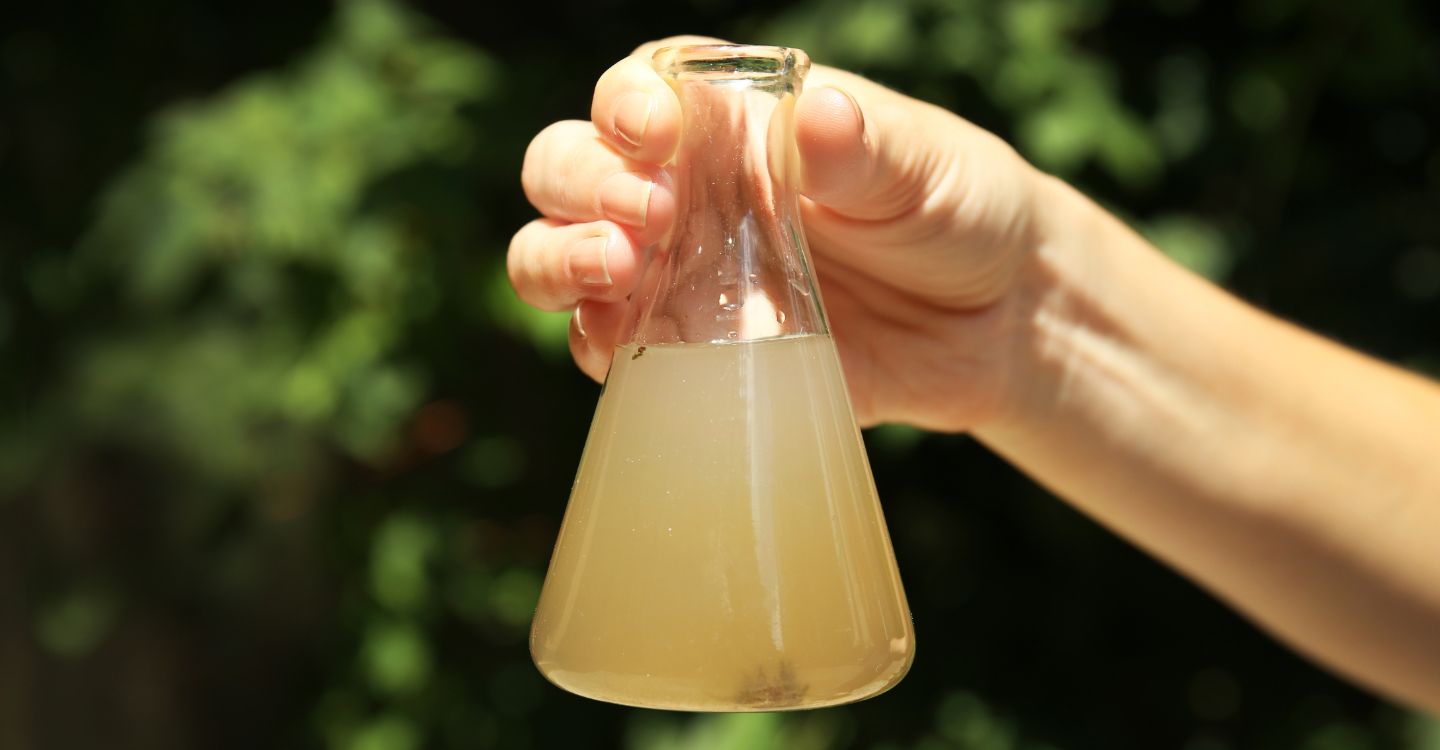
In units where water age is high, the water has more “contact time” with the metal pipes and brass fixtures. This leads to higher concentrations of lead, copper, and iron at the tap. A resident at the end of a long recirculating line might find their water has a metallic taste or causes blue-green staining in the sink, while a resident closer to the pump experiences no such issues. This is why we emphasize the importance of local testing at the individual unit level; the building’s main line results simply cannot account for the chemical changes that occur during the “last mile” of the loop.
The Impact of Modern “Green” Engineering
In an effort to save energy, many modern shared loops are designed to operate at the lowest possible temperature that still provides comfort. While this reduces the building’s carbon footprint, it narrows the margin of safety for water quality. If the return temperature of a shared loop drops below 120°F (49°C), the entire loop can become a vector for bacteria.
Furthermore, the installation of low-flow fixtures—while environmentally responsible—exacerbates the problem of water age. Because less water is being pulled out of the loop, the water stays in the system longer, leading to further disinfectant decay and more time for sediment to settle. On our blog, we frequently discuss how “high-efficiency” designs must be balanced with aggressive water management protocols to prevent these uneven safety outcomes.
Strategies for Balancing a Shared Loop
To address the issue of uneven water quality, property managers must move away from a “one-size-fits-all” maintenance strategy.
Thermal Balancing: Engineers must ensure that the loop is physically balanced so that hot water reaches the furthest units at a temperature high enough to inhibit bacterial growth (ideally above 120°F at the return).
Automated Flushing: In wings with low occupancy, automated flushing valves can be installed to “pull” fresh water through the branch lines periodically, preventing the stagnation that leads to localized failures.
Secondary Disinfection: For buildings with persistent unevenness, installing a supplemental disinfection system (such as chlorine dioxide or copper-silver ionization) can help maintain a residual throughout the entire loop, even in the distal zones.
Point-of-Use Monitoring: Regular sampling should be conducted at the “distal” points of the loop—the units furthest from the boiler. If these units pass, it is a high-confidence indicator that the rest of the building is also safe.
The Role of Transparency and Testing
For residents living in buildings with shared loops, the best defense is data. Many tenant associations are now requesting unit-specific testing to ensure their “branch” of the building is healthy. If you are experiencing inconsistent water temperature or notice a change in the smell or taste of your hot water, it may be a sign that your unit is in a “low-flow” or “low-residual” zone of the shared loop.
If you have questions about how shared loops affect your specific property or need assistance in setting up a “zone-based” testing protocol, we encourage you to reach out through our contact page. Our team can help interpret lab results and provide the engineering insights needed to bring balance back to your building’s water system.
Conclusion: Ensuring Equality at the Tap
The convenience of a shared heating loop should not come at the cost of inconsistent water safety. As our buildings grow taller and our plumbing systems more complex, we must acknowledge that water quality is a dynamic gradient, not a static constant. By monitoring the distal points of the loop and addressing the risks of stagnation and disinfectant decay, we can ensure that every resident—regardless of their floor or their distance from the boiler—receives water that is safe, clean, and consistent.
Ensuring equality at the tap requires a proactive, scientific approach to facility management. It is no longer enough to know that the water is hot; we must also know that it is protected.