In the fast-paced world of real estate, the transition from “under contract” to “closed” is often a delicate dance of inspections, appraisals, and legal filings. Historically, the water quality check was a mere formality—a single sample taken near the water meter to confirm the municipality was doing its job. However, a significant shift in environmental due diligence is causing a surge in last-minute closing delays. Buyers and lenders are no longer satisfied with a “building-wide” pass; they are demanding testing at individual, distal taps. The result? A growing number of transactions are hitting a wall when a kitchen sink or a master shower fails a lab test that the main intake passed with flying colors.
This phenomenon, known as tap-specific failure, is exposing the hidden vulnerabilities of “premise plumbing”—the miles of piping that exist between the city’s water main and the resident’s faucet. For sellers, these failures represent a costly surprise; for buyers, they represent a potential health hazard that must be resolved before the keys change hands.
The Illusion of the Main Line Pass
The primary reason these delays are catching stakeholders off guard is a fundamental misunderstanding of water movement. Most property owners assume that if the water entering the basement is clean, the water at the top-floor tap must be identical. Science tells a different story. As water travels through a building, it interacts with pipe materials, sits in stagnant “dead legs,” and undergoes temperature fluctuations that can strip away disinfectant residuals.
Lab data frequently shows that while the municipal entry point has a healthy chlorine level of 1.0 mg/L, a distal tap in a guest bathroom might show 0.0 mg/L. Once that protective barrier is gone, the tap becomes a localized site for microbial colonization. We explore the chemical breakdown of these disinfectants in our science section, highlighting how “water age” within a building’s own walls is the leading cause of these localized failures.
Point-of-Use Contamination vs. Systemic Issues
A tap-specific failure is often caused by the fixture itself rather than the pipes. Aerators, decorative “swan-neck” faucets, and flexible pull-out hoses are notorious for harboring biofilms. During a pre-closing inspection, a buyer might find that the kitchen tap fails for Pseudomonas or high iron, while the bathroom tap just five feet away passes perfectly.
For a lender, this specific failure is a red flag that requires an “all-clear” before funding can be released. This triggers a cycle of re-testing, professional disinfection of the fixtures, and sometimes the replacement of high-end hardware. These steps take time, often pushing the closing date back by several weeks as the parties wait for the lab to process the new results. These types of micro-failures are becoming a staple in the compliance reports we track, as testing becomes more granular.
The Impact of Stagnation in Vacant Properties
Real estate transactions inherently involve periods of stagnation. When a home is staged and listed, or when a family moves out before the closing, the water in the pipes stops moving. In large residential complexes or townhomes, this lack of flow allows sediment to settle and bacteria to multiply.
In many cases, the “failure” that delays the closing is a direct result of the property sitting empty. The hot water heater, acting as a large reservoir of lukewarm water, becomes a breeding ground for Legionella. When the buyer’s inspector finally turns on the tap for a sample, they are catching the “first draw” of water that has been degrading for weeks. This is a recurring theme in global issues regarding urban housing; as property turnover slows, the risk of stagnant-water failures increases.
The Lender’s New Standard of Care
Why are these delays increasing now? Because the standard of care has shifted. Major lenders and insurance providers are increasingly requiring “potability certificates” that include specific distal tap samples. They have recognized that the liability of a “sick building” or a lead-contaminated unit is too high to ignore.
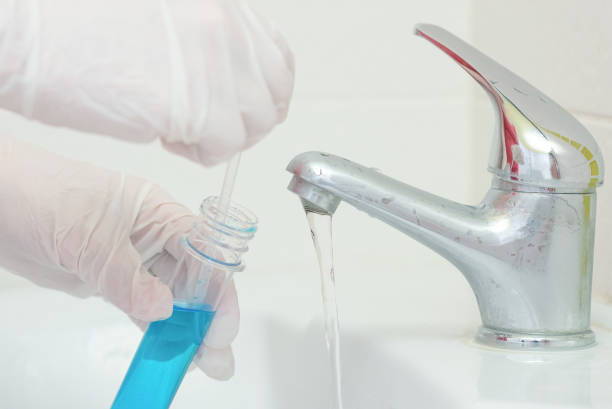
In the past, a simple visual inspection of the pipes was enough. Today, the “tap test” is the final gatekeeper. If a single tap fails to meet EPA or local health standards, the mortgage may be put on hold. This puts the seller in a difficult position: they must either pay for a professional “shock” chlorination of the entire system or risk the buyer walking away. For those looking for remediation protocols, our blog provides frequent updates on the most effective ways to treat localized plumbing failures.
The Local Nuance of Tap Failures
Every city has its own “water thumbprint,” which dictates how plumbing ages. In areas with high mineral content, the buildup of scale inside the pipes can trap bacteria and heavy metals, leading to frequent tap-specific failures. Conversely, in areas with soft, acidic water, the pipes themselves may leach copper or lead at the distal points where the water has the longest “contact time” with the metal.
Understanding these local conditions is vital for real estate agents and developers. A neighborhood known for its historic lead service lines will require a different testing and flushing strategy than a brand-new development with PEX piping and low-flow fixtures. By anticipating these local risks, sellers can conduct their own “pre-inspection” tests to identify and fix failing taps before the buyer’s inspector ever arrives.
The Cost of the Delay: More Than Just Time
A closing delay is rarely just about the date on the calendar. It involves “rate lock” extensions, additional storage fees for moving trucks, and the risk of the buyer’s financing falling through. In a high-interest-rate environment, a two-week delay caused by a failing kitchen faucet can cost a buyer thousands of dollars in added interest over the life of the loan.
Furthermore, these failures often lead to “inspection fatigue.” A buyer who was previously excited about a property may become wary after seeing a lab report showing microbial growth, even if the issue is easily fixable with a new aerator or a thermal flush. The psychological impact of a water quality failure can be harder to remediate than the pipes themselves.
How to Prevent Tap-Specific Closing Delays
To keep a real estate transaction on track, a proactive water management strategy is essential:
Implement a Flushing Protocol: If a property is vacant, the owner or agent should visit twice weekly to flush every tap, toilet, and showerhead for at least five minutes. This brings fresh, chlorinated water into the distal parts of the system.
Clean and Replace Aerators: Before the official inspection, all faucet aerators should be removed and cleaned or replaced. This eliminates one of the most common sources of localized bacterial failures.
Conduct a Pre-Listing Test: Sellers should commission their own lab report before listing. Knowing about a distal tap failure in advance allows for a quiet, inexpensive fix rather than a high-stakes drama during the closing week.
Set the Correct Water Heater Temperature: Ensure the hot water is stored at at least 140°F (60°C) to prevent bacterial growth, using mixing valves to prevent scalding at the tap.
The Role of Expert Consultation
When a tap fails, the solution isn’t always obvious. Is the lead coming from a brass fixture or a hidden solder joint? Is the bacteria living in the faucet or the hot water tank? Identifying the source of a tap-specific failure requires a scientific approach.
For those navigating a complex real estate transaction with water quality concerns, we invite you to reach out through our contact page. Our team can help interpret lab results and provide the technical documentation needed to satisfy lenders and get the deal to the closing table.
Conclusion: Closing the Gap
The era of “ignorance is bliss” regarding building water quality is over. As testing becomes a standard part of the real estate transaction, the frequency of tap-specific failures will likely continue to rise. However, these failures do not have to mean the end of a deal. By understanding the dynamics of premise plumbing and taking proactive steps to maintain the system, sellers can ensure that their water quality is a selling point rather than a closing hurdle.
In the end, a successful closing depends on transparency. By verifying the safety of the water at every tap, we are not just protecting a financial transaction—we are protecting the health of the people who will soon call that property home.