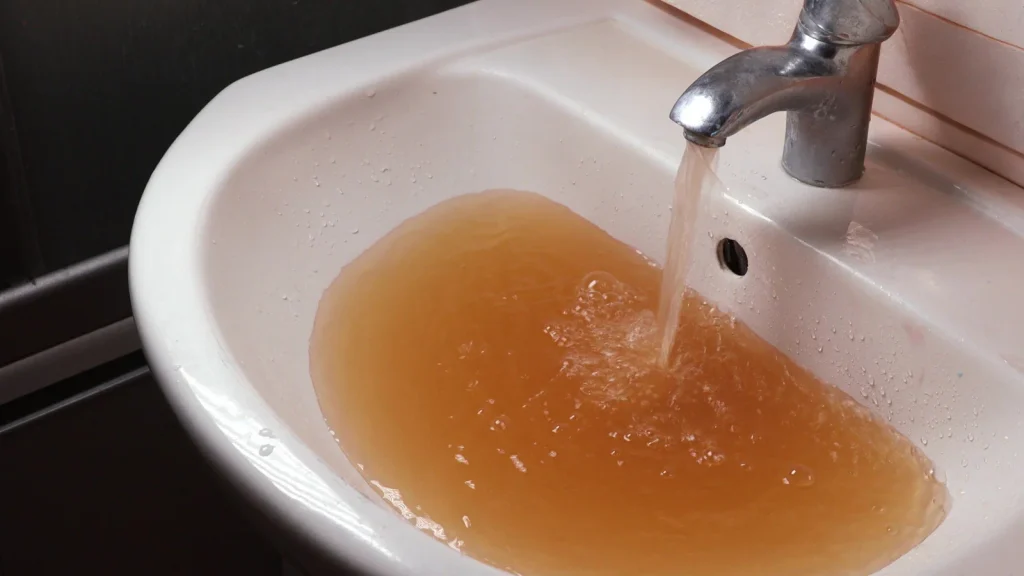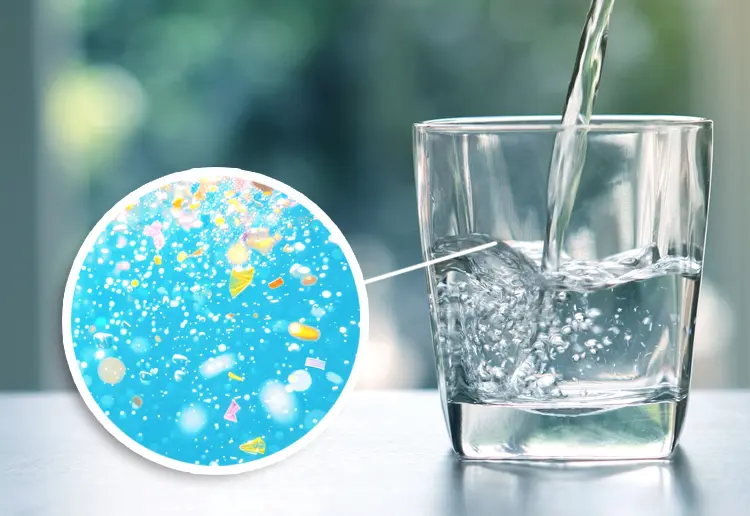
When you pour a glass of water from your kitchen faucet or twist open a factory-sealed bottle, you expect clean, refreshing hydration. Yet over the past decade, environmental scientists and toxicologists worldwide have uncovered an unsettling reality: microscopic fragments of synthetic polymers are dispersed throughout municipal supplies, groundwater wells, and commercial bottled beverages. What began as an ecological investigation into marine garbage patches has pivoted into a pressing public health question focused on the particles passing through household taps.
Understanding the actual risks requires looking past alarmist headlines and examining peer-reviewed research. While the presence of microscopic debris in our daily fluid intake is concerning, the scientific consensus regarding absorption rates, chemical additives, and physiological implications continues to develop. By dissecting synthetic microfiber shedding, municipal treatment dynamics, and home filtration efficacy, consumers can make grounded, evidence-based choices about their daily drinking supplies.
Defining the Particle Spectrum: Microplastics vs. Nanoplastics
The term “microplastic” functions as an umbrella label for synthetic materials spanning distinct chemical compositions, shapes, and dimensional boundaries. Researchers define microplastics as synthetic polymer fragments measuring between 1 micrometer (µm) and 5 millimeters (mm) across their longest axis. To put that into perspective, 5 millimeters is roughly the size of a sesame seed, while 1 micrometer is microscopic—roughly one-fiftieth the diameter of a standard human hair strand.
Nanoplastics occupy the sub-micron frontier, measuring under 1 micrometer down to 1 nanometer. Because of their minute scale, nanoplastics behave fundamentally differently than larger debris:
- Sub-Micron Mobility: Particles measuring below 1 micrometer can cross cellular barriers, potentially traversing gastrointestinal epithelial layers and entering the bloodstream.
- Vast Surface-Area-to-Mass Ratio: As plastic particles fracture into smaller segments, their surface area multiplies exponentially, significantly raising their capacity to adsorb and transport toxic organic pollutants.
- Morphological Variety: Environmental particles do not exist merely as uniform spheres; they manifest as jagged fragments, film shreds, synthetic microfibers, and weathered flakes.
Analytical chemists face substantial technical hurdles when quantifying these particles. While Fourier-transform infrared (FTIR) microscopy and Raman spectroscopy reliably identify microplastics down to roughly 10 to 20 micrometers, detecting particles smaller than 1 micrometer requires advanced laser-directed infrared systems or hyperspectral stimulated Raman scattering. Consequently, early studies frequently overlooked nanoplastics, underestimating total particle counts by several orders of magnitude.
Synthetic Microfiber Shedding and Ingestion Dynamics
Contrary to the common belief that drinking water microplastics originate solely from degraded plastic bottles or disintegrating ocean waste, forensic particle analysis reveals that synthetic microfibers constitute the overwhelming majority of detected contaminants in municipal tap samples. These elongated, thread-like synthetic polymers enter hydrological cycles through multiple distinct pathways:
- Domestic Wastewater Effluent: A single cycle of a household washing machine containing synthetic textiles—such as polyester, nylon, acrylic, or fleece—can discharge more than 700,000 microscopic fibers directly into wastewater streams.
- Atmospheric Deposition: Airborne synthetic fibers shed from textiles, carpeting, and industrial dusting settle continuously onto open reservoirs, lakes, and rivers that feed municipal distribution grids.
- Stormwater Surface Runoff: Abraded tire wear debris, composed of synthetic styrene-butadiene rubber compounds, washes off urban roadways directly into nearby tributaries during heavy precipitation events.
When ingested, fibrous particles present unique physical interactions within the mammalian digestive tract compared to smooth beads. Fibers possess irregular aspect ratios that can impede natural transit times along digestive walls. Researchers investigating mammalian tissue response observe that while dense, larger particles generally pass through the gastrointestinal tract unabsorbed, entangled fibers can occasionally adhere to mucosal linings, inducing localized physical irritation before being cleared.
Tap Water vs. Bottled Water: What the Data Shows
Consumers often turn to bottled water under the assumption that it offers pristine purity compared to municipal supplies. However, comparative investigations consistently demonstrate that single-use commercial bottled water contains higher particle concentrations than typical municipal tap water.
In a landmark benchmark study analyzing 259 individual bottles across 11 major global brands purchased in multiple countries, researchers discovered plastic contamination in 93% of the samples. The average density reached 325 particles per liter of bottled water, compared to roughly 4 to 30 particles per liter discovered in tested tap water networks. The primary polymers identified were polypropylene, polyethylene terephthalate (PET), and polystyrene.
This elevated count does not stem primarily from raw water source contamination. Instead, mechanical stress from packaging operations, thermal degradation, container wall shedding, and the friction of opening and closing threaded plastic bottle caps continually shear microscopic debris directly into the liquid immediately prior to consumption. For readers looking for a comprehensive baseline on domestic supply parameters, our water quality fundamentals guide provides additional perspective on baseline mineral and physical standards.
Municipal Treatment Barriers and Distribution Vulnerabilities
Modern conventional drinking water treatment facilities are surprisingly capable of intercepting synthetic solids. Multi-barrier processing—incorporating coagulation, flocculation, sedimentation, and rapid sand filtration—regularly removes between 88% and 99% of raw source microplastics. During flocculation, chemical coagulants cause suspended polymer particles to aggregate into larger flocs, which then sink during the sedimentation phase or become trapped within granular media beds.
Why, then, do microplastics still show up in water flowing from household faucets? The answer lies in downstream transit and localized infrastructure. Finished drinking water travels through extensive pipe networks spanning hundreds of miles before arriving at your property:
- Aging Infrastructure Interactions: Degraded joint seals, historical plastic pipe liners, and polyvinyl chloride (PVC) conduits can shed polymer material over decades of pressurized service.
- Cross-Contaminant Dynamics: Water distribution challenges are rarely isolated to a single variable. When evaluating broader pipe corrosion, homeowners dealing with aging distribution systems frequently identify heavy metal concerns alongside particulate issues, making protocols such as lead in Queens tap water testing an essential step toward understanding complete household exposure profiles.
- Secondary Contamination: Storage tanks, auxiliary booster pumps, and degraded rubber gaskets located near terminal fixtures can re-introduce particulate matter into clean water right at the point of use.
Those residing in historical or multi-family properties can explore our detailed piece on water quality in older buildings to see how structural plumbing materials influence terminal fluid quality.
Toxicological Mechanisms: Physical Translocation and Chemical Vectors
When assessing human health implications, environmental toxicologists distinguish between two distinct potential hazard vectors: physical particle toxicity and chemical carrier toxicity.
1. Physical Translocation and Cellular Stress
The human gastrointestinal tract is lined by a specialized single layer of epithelial cells covered in protective mucus. Microplastics larger than 150 micrometers cannot cross this barrier and are eliminated through normal bowel movements. However, smaller microplastics and nanoplastics (specifically particles below 10 micrometers) can undergo cellular uptake via endocytosis or paracellular transport through microfold (M) cells located in the Peyer’s patches of the intestinal ileum.
In vitro and animal model studies indicate that internalized sub-micron particles can stimulate reactive oxygen species (ROS) generation, causing mild oxidative stress and localized inflammatory signaling cascades within tissue cultures. While these cellular responses are documented in lab settings using elevated particle dosages, clinical human trials have not yet confirmed specific diagnostic pathology attributable directly to ambient drinking water microplastic concentrations.
2. The Chemical “Trojan Horse” Effect
Beyond the inert plastic matrix itself, synthetic polymers contain chemical additives compounding their environmental profile. Plasticizers (such as phthalates), flame retardants, stabilizers, and bisphenols are added during manufacturing to impart flexibility, durability, and heat resistance. Because these additives are physically blended rather than covalently bound to the plastic backbone, they can leach into surrounding aqueous environments over time.
Furthermore, hydrophobic polymer surfaces in raw surface water serve as sorbents for persistent organic pollutants (POPs), including polychlorinated biphenyls (PCBs), polycyclic aromatic hydrocarbons (PAHs), and per- and polyfluoroalkyl substances (PFAS). When ingested, the biological fluids inside the stomach can desorb these carried chemicals, introducing trace contaminants into internal systems. Readers seeking a wider inventory of industrial and environmental additives can browse our overview of common contaminants.
Filtration Particle Analysis: What Actually Works at Home?
Faced with growing awareness of microplastic pollution, many consumers look to aftermarket household filtration systems. However, filtration mechanics differ significantly across commercial categories, and not all consumer systems trap fine particles equally.
| Filtration Technology | Pore Size Range | Microplastic Retention | Nanoplastic Retention |
|---|---|---|---|
| Standard Gravity Pitchers | 50 – 100 µm | Low (ineffective for fibers) | None |
| Solid Carbon Block | 0.5 – 5 µm | High (>90% larger particles) | Minimal |
| Ultrafiltration (UF) | 0.01 – 0.1 µm | Very High (>99%) | Moderate (larger nanoplastics) |
| Reverse Osmosis (RO) | 0.0001 – 0.001 µm | Complete (>99.9%) | Complete (>99.9%) |
Pour-through gravity carafes rely primarily on granular activated carbon (GAC) combined with ion-exchange resins. While effective for reducing chlorine taste and volatile organic compounds, their loose media beds allow tiny microfibers and fine fragments to pass through unimpeded.
Dense solid-block carbon filters rated down to 1 micron offer far superior mechanical sieving for typical microplastics. However, for complete interception of both microplastics and sub-micron nanoplastics, membrane technologies represent the gold standard. Reverse osmosis forces water under hydraulic pressure through a semipermeable thin-film composite membrane with pores measuring roughly 0.0001 microns—easily barring synthetic fragments, microfibers, heavy metals, and dissolved ionic salts.
When selecting filtration, verify third-party certifications such as NSF/ANSI Standard 53 (for health-related contaminant reduction) or NSF/ANSI Standard 58 (for reverse osmosis units), specifically noting particle reduction classes.
Regulatory Landscape and Current Health Guidelines
A frequent point of confusion is why public water providers do not report microplastic levels alongside regulated contaminants. At present, no major national regulatory body—including the United States Environmental Protection Agency (EPA) or the European Commission—has enacted legally binding Maximum Contaminant Levels (MCLs) for microplastics or nanoplastics in drinking water.
This absence does not stem from administrative negligence, but rather from the rigorous requirements of public health rulemaking. Regulating any contaminant demands three clear foundations:
- Standardized, reproducible testing methodologies across commercial and municipal laboratories.
- Comprehensive epidemiological and toxicological dose-response benchmarks establishing clear causality with specific adverse health endpoints.
- Technologically feasible, cost-effective treatment protocols capable of consistent community-scale performance.
California became the first global jurisdiction to mandate formal testing protocols, requiring selected large municipal providers to monitor microplastic levels over a multi-year testing schedule to build baseline datasets. Concurrently, environmental agencies maintain stringent frameworks for other critical contaminants. For context on national regulatory benchmarks, consult the EPA health protection standards for lead exposure or view the EPA consumer guide to radon to observe how established exposure thresholds are systematically enforced.
The World Health Organization (WHO) conducted exhaustive literature evaluations regarding microplastics in drinking water, concluding that routine ingestion at current estimated levels does not present an acute health hazard. Nonetheless, the WHO strongly emphasizes the substantial gaps in nanoplastic toxicity data, urging accelerated toxicological research while prioritizing the removal of microbial pathogens and hazardous chemical agents that pose documented acute health risks.
Practical Takeaways for Everyday Water Security
Addressing plastic particles in household water supplies does not require radical lifestyle overhauls or expensive equipment. Straightforward, evidence-based habits can meaningfully cut down your daily intake:
- Rely on Cold Tap Water for Drinking and Cooking: Hot water extracts higher levels of pipe-lining compounds and trace residues. Run the tap cold before filling glasses or kettles, especially if the fixture has been idle for several hours.
- Minimize Single-Use Bottled Water: Because bottle manufacturing and container wall friction create elevated particle loads, opting for tap water treated through a certified home filter markedly reduces plastic particle ingestion.
- Opt for Certified Membrane Systems: If installing filtration, look for high-density 0.5-micron solid carbon blocks, ultrafiltration membranes, or under-sink reverse osmosis units evaluated by independent certifiers (such as NSF International or the Water Quality Association).
- Replace Media Cartridges on Schedule: Saturated filters can undergo particle breakthrough or harbor bacterial growth, diminishing their sieving performance over extended use.
- Transition Away from Plastic Kettles and Heating Vessels: Repeated boiling in polycarbonate or polypropylene appliances accelerates polymer degradation, introducing higher numbers of microscopic fragments directly into prepared hot beverages. Glass, porcelain, or stainless steel alternatives eliminate this issue entirely.
If you suspect underlying plumbing problems or have unusual municipal supply reports, you can contact us to review diagnostic testing options suited to your neighborhood. You can also explore the Water Quality Journal for ongoing coverage of emerging hydrological research, municipal treatment updates, and clean water engineering.
Disclaimer: This article provides educational information based on currently available scientific literature and is not intended as medical advice. Individuals with specific gastrointestinal or immunological concerns should consult a licensed healthcare professional, and domestic water quality questions should be directed to certified regional drinking water authorities.