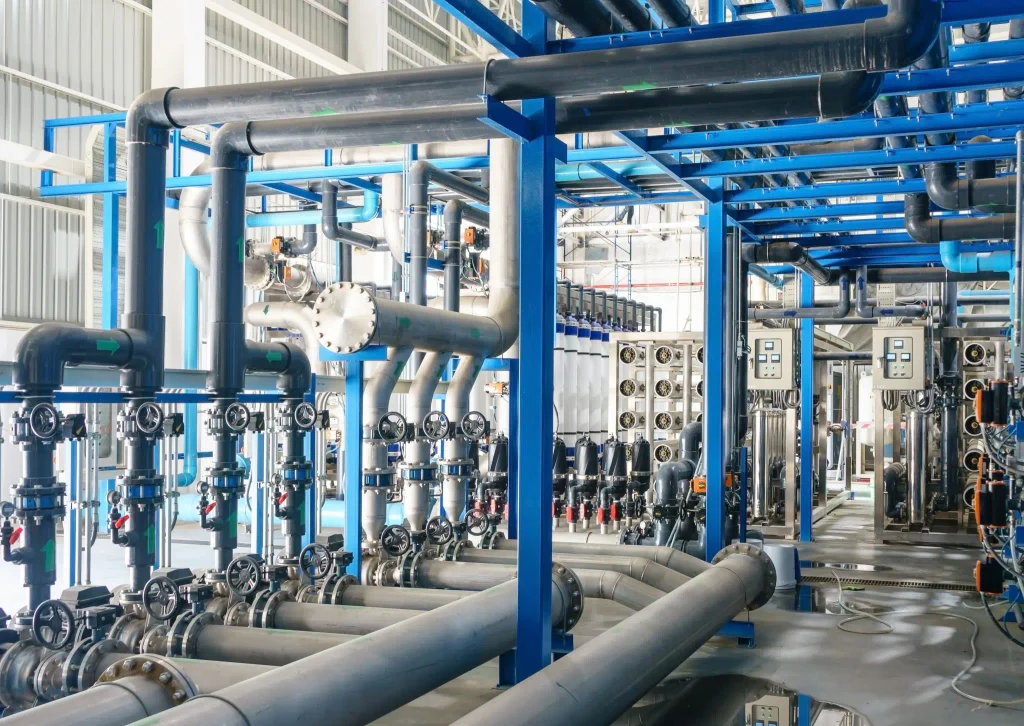
Every time you turn on a faucet to fill a drinking glass, prepare dinner, or brew morning coffee, you tap into one of the most sophisticated engineering feats of modern civilization. Raw water sourced from rivers, lakes, reservoirs, or subterranean aquifers contains suspended sediments, biological organisms, chemical traces, and decaying organic matter. Transforming this complex raw liquid into potable, safe water compliant with rigorous federal and municipal standards is the daily responsibility of municipal drinking water treatment facilities.
Municipal water treatment operates at the intersection of civil engineering, environmental microbiology, and aqueous chemistry. Rather than relying on a single mechanical barrier, utilities utilize a multi-barrier treatment train designed so that if any individual unit process experiences reduced efficiency, downstream stages ensure finished water remains clean and safe. Understanding how raw surface and ground sources undergo this systematic transformation reveals the vital infrastructure shielding human communities from waterborne disease and environmental pollution.
Raw Water Intake and Preliminary Physical Screening
The journey begins at the source intake. Municipal systems generally extract water from two categories: surface supplies—such as rivers and reservoirs—and groundwater drawn from deep wellfields. Surface waters inherently face higher levels of exposure to environmental runoff, seasonal leaf fall, algae blooms, and industrial discharges. Consequently, surface plants implement rigorous pre-treatment stages to handle broad fluctuations in incoming turbidity.
Water enters an intake structure fitted with coarse physical screens known as bar racks. These heavy steel grates catch large debris like tree branches, river foliage, aquatic weeds, and plastic debris that would otherwise clog raw-water pumps and damage downstream impellers. In facilities pulling from rivers prone to siltation, water next enters intake wells or grit chambers. Here, velocity slows enough to allow heavy inorganic particles—such as coarse sand and gravel—to settle naturally by gravity before chemical addition starts.
In seasonal climates, raw water intakes also monitor thermal stratification and dissolved oxygen levels. Reservoir waters often suffer from seasonal turnover, bringing lower-quality benthic sediments toward the surface. Many modern facilities employ selective multi-depth intake ports, enabling plant operators to draw raw water from the specific reservoir elevation exhibiting the lowest turbidity and minimal organic loading.
The Chemistry of Coagulation: Neutralizing Suspended Particles
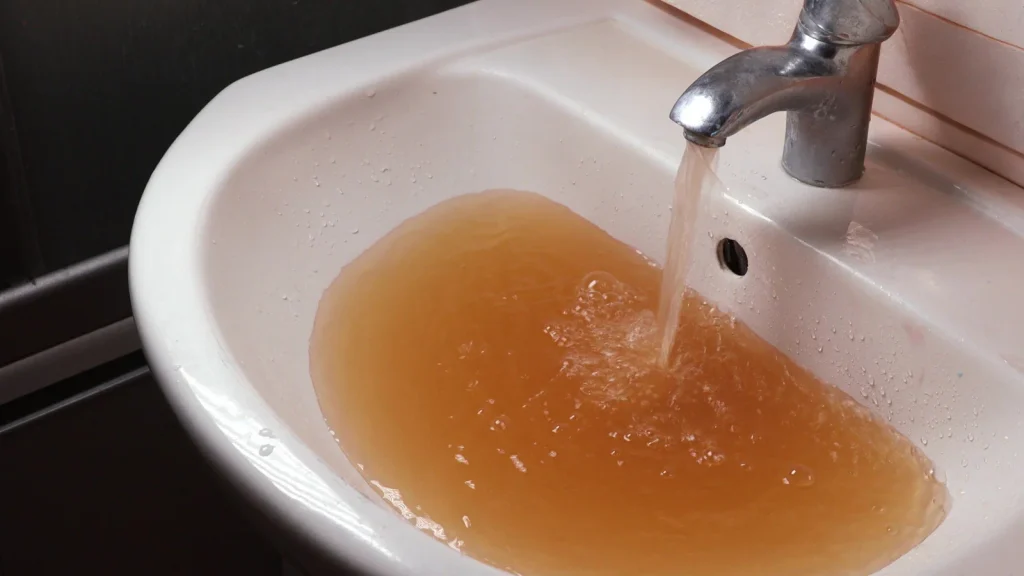
Once coarse debris is eliminated, the remaining raw water often looks cloudy or tea-colored. This turbidity stems from fine suspended solids, silts, clays, and natural organic matter (NOM) derived from decaying vegetation. Most of these tiny particles carry a negative electrostatic surface charge. Because like charges repel, these particles remain perpetually suspended in the water column without ever colliding or settling out on their own.
To overcome this electrostatic repulsion, utilities initiate chemical coagulation. Water flows into a rapid-mix basin where mechanical impellers spin at high speed. Operators inject precise doses of primary chemical coagulants, most commonly aluminum sulfate (alum), ferric chloride, or polyaluminum chloride. The selection of coagulant hinges on raw water temperature, alkalinity, and pH.
When metallic salts dissolve in water, they hydrolyze instantly, producing positively charged metal-hydroxide complexes. These trivalent metal cations neutralize the negative charges on suspended particles within seconds. This rapid destabilization reduces the zeta potential of the particles, eliminating the repulsive electrostatic barrier and setting the stage for particle agglomeration.
Balancing Water Chemistry and pH
Coagulation reactions consume natural alkalinity in the water. If alkalinity drops too low, pH plunges, coagulant hydrolysis stalls, and soluble metal species linger in solution rather than precipitating out. Treatment operators continuously balance water chemistry by introducing lime (calcium hydroxide), caustic soda (sodium hydroxide), or soda ash to maintain optimal coagulation pH, which typically ranges between 5.5 and 7.2 depending on whether iron or aluminum salts serve as the base.
Flocculation: Building Settleable Aggregates
Destabilized microscopic particles require gentle handling to grow into dense, settleable clumps called “floc.” Moving water directly from rapid mixing to a settling basin would shear fragile particle attachments. Instead, water passes from the flash mixer into a series of compartmentalized flocculation basins.
Flocculation relies on gentle, tapered mechanical stirring. Water progresses through successive chambers—often three or four stages—where paddle wheels, vertical turbine impellers, or walking-beam flocculators rotate at progressively slower speeds:
- First Stage Flocculation: Provides moderate velocity gradients (high G-values) to maximize particle collision frequency right after destabilization.
- Intermediate Stage: Reduces paddle speed to allow micro-floc to aggregate into visible, pin-head-sized clumps.
- Final Stage: Operates at slow, gentle speeds (low G-values) to foster the accumulation of dense, snowflake-like floc without causing shear-induced breakup.
In many facilities treating cold or low-turbidity waters, operators introduce coagulant aids such as synthetic polymers (anionic or nonionic polyacrylamides) or activated silica. These long-chain organic molecules act as molecular bridges, binding smaller flocs into robust, dense masses that settle swiftly in downstream clarifiers.
Clarification and Sedimentation Technologies
Once floc particles reach sufficient mass, the flow gently spills into clarification basins. The primary objective of sedimentation is to clarify the liquid by letting gravity pull the heavy chemical-biological floc to the basin floor before water reaches the filtration beds. If unclarified water were sent directly onto filters, the filter media would blind and clog within hours.
Conventional Rectangular and Circular Clarifiers
In traditional setups, water spends two to four hours drifting slowly through long rectangular settling basins or large circular clarifiers. The water velocity drops below the terminal settling velocity of the floc particles. As water approaches the surface launders (exit troughs), clear clarified water overflows weir plates, while the accumulated sludge gathers on the basin floor. Mechanical scrapers, underwater scrapers, or continuous suction headers slowly push this chemical sludge into collection sumps for mechanical dewatering and disposal.
High-Rate Clarification Systems
Modern municipal facilities facing footprint constraints increasingly opt for high-rate clarification technologies:
- Lamella Plate and Tube Settlers: Slanted plates or honeycomb tubes inclined at 55 to 60 degrees are mounted within the upper section of settling tanks. These plates cut particle settling distances down to mere inches, expanding effective settling surface area by several multiples and shortening detention times.
- Dissolved Air Flotation (DAF): Extremely effective for low-density floc resulting from algal blooms or high organic coloration. DAF saturates a side-stream of water with compressed air. When released into the contact chamber, millions of micro-bubbles attach to floc particles, floating them to the surface where mechanical skimmers scrape the sludge blanket away.
- Ballasted Flocculation: Microsand and polymer are injected into the flocculation stage. The sand acts as a dense ballast core, weighting down the floc and achieving settling velocities ten to twenty times faster than conventional gravity clarification.
Granular Media and Membrane Filtration
Sedimentation removes approximately 90 to 95 percent of suspended solids, but fine micro-particles, dissolved colloids, and encysted protozoan parasites—such as Cryptosporidium and Giardia lamblia—remain in the clarified supernatant. Filtration acts as the physical barrier designed to polish water down to sub-turbidity levels, frequently achieving effluent turbidities below 0.1 Nephelometric Turbidity Units (NTU).
The workhorse of drinking water filtration remains the dual-media or multi-media rapid gravity filter. A typical deep-bed filter column contains carefully selected, layered materials resting atop an underdrain system:
- Anthracite Coal: A coarse top layer (typically 18 to 24 inches thick with an effective size around 1.0 mm) that captures larger residual floc throughout the depth of the bed, preventing premature surface binding.
- Silica Sand: A denser intermediate layer (typically 8 to 12 inches thick with an effective size around 0.5 mm) that captures smaller particles via physical straining and surface interception.
- Garnet or Ilmenite: A high-density fine gravel or mineral sand layer at the bottom providing fine polish before the effluent reaches collector nozzles.
Filtration works through an interplay of physical mechanisms: mechanical straining, inertial impaction, sedimentation within pore channels, and chemical adsorption. When water filters pass through, head loss steadily climbs as suspended matter fills the interstitial pore spaces between sand grains. Once head loss exceeds operational limits, or when turbidity approaches regulatory thresholds, operators place the filter into backwash mode. Clean water and compressed air are pumped upward through the underdrain, fluidizing the sand bed and flushing captured sediments out to the plant’s waste stream.
Advanced facilities increasingly deploy low-pressure membrane filtration—specifically microfiltration (MF) and ultrafiltration (UF) hollow-fiber modules. These membranes operate with microscopic pore sizes ranging from 0.01 to 0.1 microns, creating an absolute physical exclusion barrier that blocks protozoans and bacteria without relying solely on chemical conditioning.
Advanced Disinfection: Inactivating Microbial Pathogens
Physical separation cleans the water, but chemical and biological safety demands thorough disinfection. Disinfection targets pathogenic bacteria (such as Salmonella and Vibrio cholerae), enteric viruses, and microbial cysts that cause acute gastrointestinal disease.
Chlorination remains the most widespread primary disinfectant globally. Facilities apply either chlorine gas, sodium hypochlorite liquid, or on-site generated hypochlorite solution. When chlorine reacts with water, it forms hypochlorous acid (HOCl) and hypochlorite ions (OCl-). Hypochlorous acid readily diffuses through bacterial cell membranes, inactivating respiratory enzymes and destroying internal cellular machinery.
To eliminate chlorine-resistant pathogens like Cryptosporidium, utilities regularly incorporate multi-stage advanced oxidation and physical disinfection barriers:
- Ultraviolet (UV) Irradiation: Water flows through specialized reactors lined with high-output mercury or amalgam lamps emitting shortwave UV-C light (wavelength 254 nm). The radiation penetrates microbial cell walls, permanently scrambling their DNA and RNA sequences through pyrimidine dimerization, preventing replication without producing chemical byproducts.
- Ozonation: Ozone gas (O3) generated on-site via electric corona discharge is bubbled into contact basins. Ozone provides rapid pathogen inactivation and breaks apart taste-and-odor compounds produced by cyanobacteria, such as geosmin and 2-methylisoborneol (MIB).
Disinfection requires strict process control. When chemical oxidants react with residual dissolved organic carbon in natural waters, trace chemical disinfection byproducts (DBPs) can form, including trihalomethanes (THMs) and haloacetic acids (HAAs). Water utilities adjust their coagulation and activated carbon processes upstream to eliminate organic precursor molecules before disinfectants are applied.
Corrosion Control and Finished Water Stabilization
Treated, filtered water cannot be pumped directly into distribution networks without chemical stabilization. Soft, low-alkalinity, acidic water is aggressive and corrodes iron, copper, and lead components inside public mains and private plumbing fixtures. If left unbuffered, pipe degradation leaches heavy metals into household tap water.
Water plants adjust finished water chemistry to passivate plumbing interiors. Operators use lime, sodium carbonate, or caustic soda to maintain a balanced Langelier Saturation Index (LSI), ensuring water is neither scale-forming nor corrosive. In networks containing legacy lead service connections, utilities continuously inject small doses of orthophosphate or zinc orthophosphate. Orthophosphates react with dissolved lead ions to produce an insoluble mineral passivation layer—lead hydroxylpyromorphite—along pipe walls, locking the lead in place.
Utilities must monitor broad ecological influences across their surrounding watersheds. Runoff containing chemical fertilizers and livestock residues alters upstream organic matter and nitrogen cycles; plant engineers frequently reference EPA agricultural water quality practices to assess how rural land management choices impact raw municipal water quality. Similarly, continuously modernizing distribution grids relies on EPA scientific research on water systems, which sets testing benchmarks for hydraulic modeling, pipe aging, and distribution-line disinfectant stability.
The Distribution Challenge and Property-Level Water Dynamics
Water leaving the clearwell of a municipal treatment facility is rigorously tested and biologically safe. However, clean finished water must traverse miles of aging distribution pipes, water storage towers, and neighborhood mains before reaching local consumer taps.
Utilities maintain a secondary disinfectant residual—typically chloramines (chlorine combined with ammonia) or free chlorine—throughout the distribution grid. This lingering chemical residual suppresses bacterial re-growth, prevents biofilm formation on pipe linings, and protects against contamination from transient water-main pressure drops. For a broader perspective on the diverse impurities that challenge distribution grids, reviewing an overview of common contaminants clarifies how volatile organic chemicals, heavy metals, and microbes enter municipal networks.
The greatest threat to drinking water safety often occurs in the final hundred feet of transit: private service lines, building risers, and interior plumbing. While municipal plants neutralize source hazards, premises with older plumbing matrices—particularly lead service connections, soldered copper piping, or galvanized lines—pose severe contamination risks. Specialized protocols, such as hospital lead water testing for Manhattan medical centers, illustrate the stringent verification necessary when treating vulnerable populations where plumbing-induced lead leaching cannot be tolerated. Similar plumbing vulnerabilities are detailed in this assessment of water quality in older buildings, which explains how stagnation in tall risers degrades chemical passivation films.
Monitoring, Compliance, and Community Water Safety
Modern water utility operations rely on SCADA (Supervisory Control and Data Acquisition) systems, which process millions of real-time sensor measurements every hour. Automated turbidimeters, stream-streaming current monitors, pH probes, and free-chlorine sensors verify that incoming and outgoing flows match state and federal standards under the Safe Drinking Water Act (SDWA).
In addition to computerized inline diagnostics, lab analysts draw manual bench samples around the clock. Technicians run bacteriological assays, inductively coupled plasma mass spectrometry (ICP-MS) tests for heavy metals, and gas chromatography to detect synthetic chemicals. Consumers who wish to learn more about analytical thresholds, compliance ranges, and testing metrics can refer to this water testing and safety FAQ for comprehensive guidance.
Maintaining high-performance municipal water infrastructure is an ongoing endeavor requiring dedicated financial investment, watershed stewardship, and technological innovation. To remain updated on evolving filtration tech, chemical treatments, and emerging regulations on per- and polyfluoroalkyl substances (PFAS), readers can explore various informative water quality blog articles covering municipal trends.
Practical Steps for Consumers
While municipal treatment facilities deliver highly regulated water, building owners and residents can take clear, practical steps to protect tap water quality:
- Flush Your Faucets: If water has sat stationary in home pipes for more than six hours, run the cold water tap for one to two minutes before drinking or cooking to clear stale water that has lingered in contact with interior plumbing materials.
- Read Your Annual Water Quality Report: Review your utility’s Consumer Confidence Report (CCR), which is mailed or posted online each summer, to understand your water source, detected substances, and regulatory compliance.
- Clean Faucet Aerators Regularly: Unscrew the small mesh screens on faucet spouts every few months to rinse out trapped sediment, mineral flakes, or solder particles.
- Use Certified Point-of-Use Filters: If you suspect interior lead lines or prefer extra protection against chlorine taste, use water filters tested and certified to NSF/ANSI Standards 53 (health effects) or 58 (reverse osmosis).
- Consult Professionals: For personal health inquiries, persistent unusual water characteristics, or testing private well water, consult certified water treatment specialists or local healthcare providers to obtain accurate guidance.
Municipal water treatment represents an unbroken chain of environmental engineering, combining chemical charge neutralization, physical flocculation, deep-bed granular straining, multi-spectrum disinfection, and corrosion control. This robust, continuous cycle ensures that clean, safe, and reliable drinking water flows from every municipal tap day after day.