In the complex world of modern plumbing, we often take for granted that the water flowing from our taps is as safe as the water leaving the treatment plant. For decades, municipal water providers have relied on a “secondary disinfectant”—usually free chlorine or chloramines—to act as a protective barrier throughout the distribution network. This residual is intended to travel all the way to the consumer’s faucet, preventing the regrowth of opportunistic pathogens.
However, a quiet crisis is brewing within the internal piping of hospitals, hotels, high-rise apartments, and office complexes. While cold water taps often maintain healthy disinfectant levels, hot water systems are frequently found to be “residual dead zones.” When chlorine levels drop to near zero, the safety net disappears, turning high-efficiency water heaters and expansive piping networks into potential breeding grounds for bacteria like Legionella.
Understanding why this happens requires a deep dive into the chemistry of heat, the physics of large-scale plumbing, and the unintended consequences of modern green building initiatives.
The Thermal Degradation of Chlorine
The primary culprit behind dropping residuals is simple thermodynamics. Chlorine is a highly reactive oxidant, and like most chemical reactions, its decay is accelerated by heat. In a standard residential setting, water stays in the heater for a relatively short time. But in large buildings, the volume of the storage tanks and the length of the recirculating loops mean that water is kept at elevated temperatures for hours or even days.
Research featured in our science section highlights that for every 10°C increase in temperature, the rate of chlorine decay can double or even triple. When water is heated to the 120°F–140°F (49°C–60°C) range typical for domestic hot water, the chemical bonds of the disinfectant break down rapidly. By the time that water travels from a basement boiler to a tenth-floor showerhead, the “residual” is often undetectable.
The Biofilm Factor and Surface Area
Large buildings are not just scaled-up houses; they are biological ecosystems. The ratio of pipe surface area to water volume is significantly higher in these structures. Every inch of copper, PEX, or galvanized steel piping provides a substrate for biofilm—a slimy layer of microorganisms that anchors itself to the pipe walls.
Biofilms are incredibly “demand-heavy.” They consume chlorine as it passes by, using up the disinfectant as it attempts to oxidize the organic matter. In hot water lines, where the heat has already weakened the chlorine’s stability, the biofilm effectively “mops up” whatever is left. This creates a feedback loop: lower chlorine allows more biofilm to grow, and more biofilm kills off chlorine even faster. We often explore these micro-ecosystems in our global issues coverage, as many nations struggle with aging infrastructure that exacerbates these biological demands.
Stagnation: The Silent Killer of Water Quality
If heat is the catalyst, stagnation is the environment where water quality goes to die. In many modern buildings, occupancy fluctuates wildly. Office buildings might sit empty over the weekend; hotel wings might remain vacant during off-peak seasons. When water sits motionless in the pipes, it continues to lose heat (cooling to the “lukewarm” range preferred by bacteria) and continues to react with pipe walls.
In a large building, “dead legs”—sections of piping that lead to unused fixtures—are common. These dead legs allow stagnant, non-disinfected water to seep back into the main flow, seeding the rest of the building with bacteria. Even in buildings with recirculation pumps designed to keep hot water moving, the “return” lines often show much lower residuals than the “supply” lines, proving that the trip through the building is a gauntlet that few disinfectants survive.
The Conflict Between Energy Efficiency and Public Health
There is a growing tension between the drive for sustainability and the necessity of water safety. To save energy and prevent scalding, many building managers lower the temperature of their water heaters to roughly 110°F–115°F. While this reduces the carbon footprint, it places the water squarely in the “Goldilocks zone” for bacterial growth.
Furthermore, low-flow fixtures—designed to conserve water—have the unintended side effect of increasing “water age.” Because less water is being pulled through the system, the water stays in the pipes longer. Increased water age leads to increased disinfectant decay. Building owners are often surprised to find that their LEED-certified, water-saving building is actually more susceptible to residual loss than an older, “wasteful” structure.
The Public Health Stakes
Why does a drop in chlorine matter if the water was clean when it entered the building? The answer lies in Legionella pneumophila, the bacteria responsible for Legionnaires’ disease. Unlike many waterborne pathogens that cause gastrointestinal distress, Legionella is inhaled via aerosols—the fine mist from a shower, a decorative fountain, or a cooling tower.
According to data from the Centers for Disease Control and Prevention (CDC), the vast majority of Legionnaires’ outbreaks are linked to large, complex building water systems where disinfectant residuals were poorly managed. Without chlorine to keep the microbial population in check, these buildings become accidental incubators. The loss of residual isn’t just a chemistry quirk; it’s a significant vulnerability in our public health infrastructure.
Monitoring and Mitigation Strategies
Addressing the “vanishing residual” requires a move away from the “set it and forget it” mentality of traditional plumbing. Building managers must adopt active Water Management Plans (WMPs).
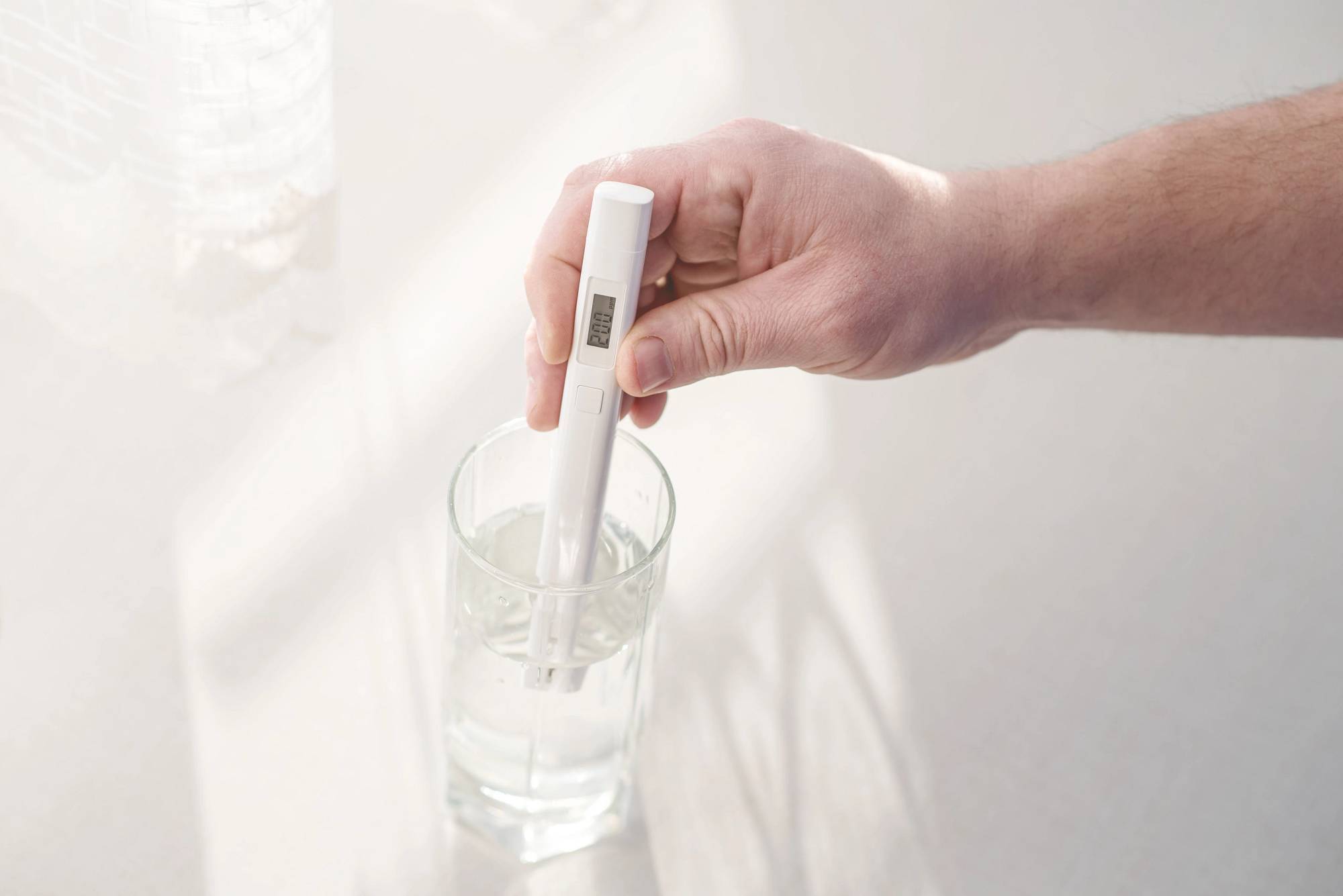
Regular Testing and Point-of-Entry Monitoring It is no longer enough to rely on the city’s water report. Large buildings should monitor disinfectant levels at the point where water enters the building and at the furthest points of the hot water loop (the “distal” sites). If you need guidance on setting up a monitoring schedule, our reports provide frameworks for different facility types.
Supplemental Disinfection In many cases, the chlorine provided by the municipality is simply not enough to survive the journey through a large hot water system. Some facilities are now installing “secondary” or supplemental disinfection systems. These on-site units inject additional chlorine, chlorine dioxide, or copper-silver ions directly into the building’s water lines to maintain a protective barrier.
Thermal Eradication (Heat Flushes) Periodically raising the temperature of the entire system to above 140°F (60°C) can help kill off biofilms and pathogens. However, this must be done with extreme caution to prevent scalding and does not solve the long-term problem of residual decay once temperatures return to normal.
The Importance of Local Knowledge
Every city has a unique “water thumbprint.” The pH, alkalinity, and organic carbon levels of the local municipal supply all dictate how fast chlorine will disappear once it hits a building’s boiler. For building engineers, staying connected with local water quality experts is essential to tailoring a treatment plan that works for their specific geography and pipe chemistry.
The Path Forward
As we continue to build larger and more complex structures, the “last mile” of water treatment—the journey from the street to the tap—becomes the most critical frontier in water safety. We must stop viewing building plumbing as a passive delivery system and start seeing it as a dynamic chemical environment that requires active management.
Addressing the drop in chlorine residuals in hot water taps is a multi-disciplinary challenge. It requires cooperation between architects, plumbing engineers, facility managers, and public health officials. By prioritizing disinfectant stability alongside energy efficiency, we can ensure that our “green” buildings are also “safe” buildings.
For more insights into the evolving landscape of water chemistry and infrastructure, feel free to browse our latest updates on the blog. Maintaining water quality is a continuous process, and the more we understand the stressors on our systems, the better we can protect the people who live and work within them.
If you have specific questions about building-scale water issues or wish to share data from your facility, please visit our contact page to get in touch with our team.