For decades, the conversation surrounding water safety in the Garden State was dominated by a single element: lead. Driven by aging infrastructure in legacy cities like Newark and Jersey City, the push for lead service line replacement became a national model for municipal action. However, as we move through 2026, a new data point is emerging from independent laboratory audits across New Jersey. Residents from the suburban reaches of Bergen County to the coastal developments of Monmouth County are discovering that while their lead levels may be low, their copper levels are failing at a rate that has taken many by surprise.
The trend is shifting the focus from the street-level mains to the “premise plumbing”—the pipes and fixtures inside the home. As more homeowners and property managers invest in comprehensive reports, the science is revealing that New Jersey’s water chemistry is increasingly aggressive toward copper, leading to widespread exceedances of the EPA’s action level of 1.3 parts per million (ppm).
The Anatomy of a Copper Failure
Copper is the workhorse of New Jersey plumbing. It is valued for its durability, malleability, and natural antimicrobial properties. In a perfectly balanced system, a thin, protective mineral scale forms on the interior of the pipe, acting as a barrier between the metal and the water. However, this balance is delicate.
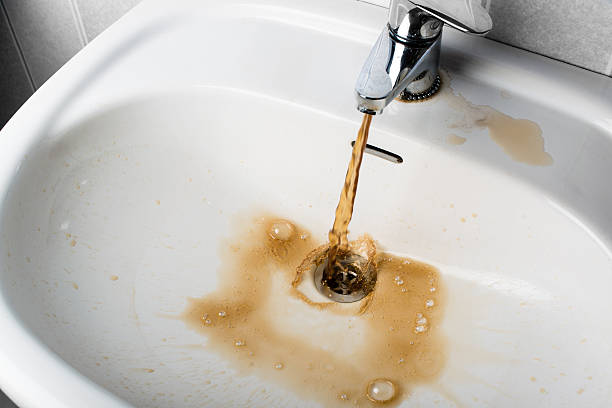
When we analyze recent reports, we see that many of these copper failures are not the result of a single catastrophic event, but rather a slow, chemical erosion. Factors such as low pH, fluctuating alkalinity, and high dissolved oxygen can strip the protective scale away. Once the bare metal is exposed, the water begins to “eat” the pipe. This process is often invisible until a resident notices blue-green staining on a white porcelain tub or a sharp, metallic taste in their morning tea.
Why New Jersey Is Seeing a Spike in 2026
The surge in copper failures across the state can be attributed to several converging factors specific to the New Jersey landscape:
The Success of Lead Mitigation: Ironically, some of the chemicals used by utilities to prevent lead leaching can, under certain conditions, alter the solubility of copper. As towns across the state have successfully adjusted their science to lock down lead, the resulting shifts in phosphate levels or pH have occasionally made the water more aggressive toward copper.
Aging “Mid-Century” Suburbs: Many of New Jersey’s suburban developments were built in the 1960s through the 1980s. These homes rely almost exclusively on copper plumbing. As these systems reach the 40-to-60-year mark, the pipes are thinning, and the protective scale is becoming less stable. On our blog, we’ve noted that these mid-century homes are now failing at higher rates than even older pre-war buildings, which often have thicker-walled pipes.
Water Stagnation in Modern Lifestyles: With the rise of hybrid work and secondary residences, water sits stagnant in pipes longer than it did twenty years ago. Stagnation is the primary catalyst for copper leaching. When water sits for six to eight hours, it has ample time to reach chemical equilibrium with the copper walls, resulting in the high “first-draw” failures we are seeing in recent laboratory audits.
The Health Risks: Beyond the Blue Stain
While copper is an essential trace mineral for human health, the concentrations being found in some New Jersey taps are well beyond what the body requires. The immediate health effects of high copper exposure are primarily gastrointestinal. Residents in affected homes often report bouts of nausea, stomach cramps, and diarrhea—symptoms that are frequently attributed to food sensitivity or a “stomach bug” rather than the kitchen tap.
In the long term, chronic exposure to elevated copper levels can lead to more serious complications, including liver and kidney strain. This is particularly concerning for vulnerable populations, such as infants and the elderly, whose bodies are less efficient at processing excess minerals. As we monitor global issues in water safety, New Jersey’s copper spike highlights a growing need for “whole-chemistry” testing rather than just focusing on a single contaminant.
The Economic Impact of Aggressive Water
A copper failure is not just a health risk; it is an economic one. Aggressive water that leaches copper is also thinning out the walls of the pipes. This leads to the “pinhole leak” phenomenon that has plagued many New Jersey homeowners. A single pinhole leak behind a wall can cause thousands of dollars in water damage and mold remediation.
Furthermore, copper-rich water is devastating to modern high-efficiency appliances. Tankless water heaters, high-end dishwashers, and luxury espresso machines are particularly sensitive to mineral and metal loads. Homeowners who ignore a metallic taste in their water often find themselves replacing these expensive units years before their expected end-of-life.
How to Identify a Potential Failure in Your Home
The “new normal” for New Jersey residents involves becoming more attuned to the sensory cues of their plumbing.
- Blue-Green Patina: Look at the base of your faucets and the drains of your tubs. A turquoise or blue-green stain is a definitive sign of active copper leaching.
- Metallic Aftertaste: If your water tastes “sharp” or “tinny,” especially after it has sat in the pipes for several hours, your copper levels are likely elevated.
- Frequent Plumbing Repairs: If you or your neighbors are experiencing an uptick in pipe repairs or valve failures, your building’s water chemistry may be out of balance.
The Importance of Multi-Point Laboratory Auditing
Because copper levels can vary significantly between the kitchen, the laundry room, and the upstairs bathroom, a single-point test is often insufficient. New Jersey families are increasingly opting for multi-point audits to identify the “hot zones” in their plumbing.
A professional audit provides more than just a “pass” or “fail” result. It provides the science behind the failure. By looking at the Langelier Saturation Index (LSI)—a measure of whether water is likely to scale or corrode—a lab can tell a homeowner if their problem is localized to a single fixture or if it is a systemic issue requiring a whole-home neutralization system. This data is the most valuable tool a resident has when contacting a plumber or water treatment specialist.
Mitigation Strategies for New Jersey Homeowners
If your home is part of the “more than expected” copper failures, there are clear paths to remediation:
Implement a Flushing Protocol: The simplest way to reduce copper exposure is to run the cold water tap for 30 to 60 seconds before using it for drinking or cooking. This flushes out the “aged” water that has been sitting in the pipes. pH Neutralization: If your water is naturally acidic, a whole-home calcite neutralizer can raise the pH and stop the water from being aggressive toward your pipes. Phosphate Injection: Some homeowners choose to install a small phosphate injection system, which recreates the protective mineral scale that the water has stripped away. Point-of-Use Filtration: For the highest level of safety, an ion-exchange or reverse osmosis system at the kitchen tap can remove copper and other dissolved metals, ensuring that the water you consume is pure.
Conclusion: Data-Driven Safety for the Garden State
The discovery that New Jersey is catching more copper failures than expected is not a reason for panic, but a call for precision. It is a reminder that water quality is a dynamic, evolving science. As we move away from the “one-size-fits-all” approach to water safety, the individual laboratory audit has become the most important document in a homeowner’s file.
By understanding the science of your own home’s plumbing and staying informed through localized reports, you can protect both your family’s health and the longevity of your home’s infrastructure. The Garden State has led the way in lead safety; now, it is time to apply that same rigor to the rest of the chemical profile. For more information on navigating these trends or to schedule a professional audit, visit our blog or contact our team today.