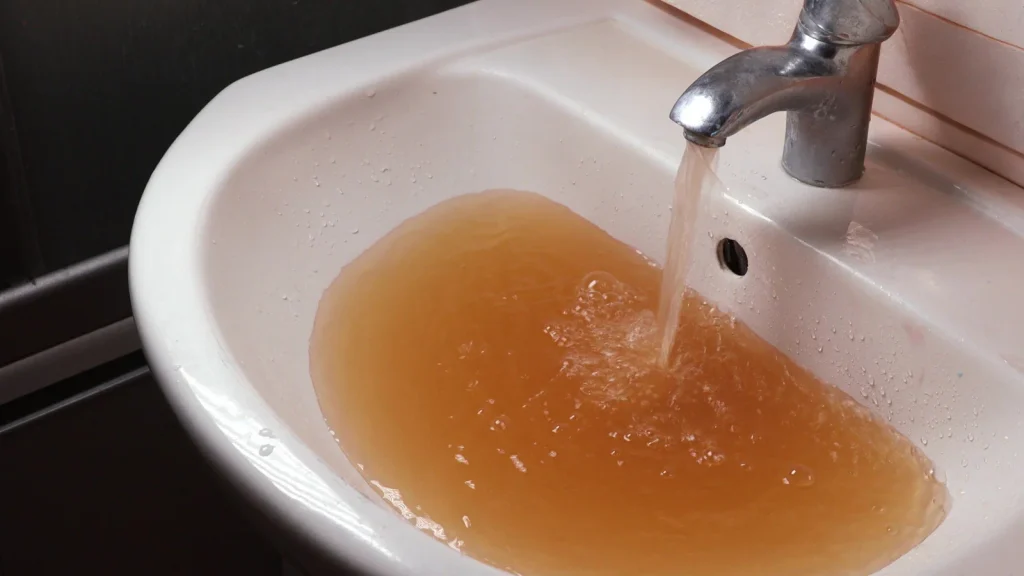
Turning on the kitchen tap and watching a stream of opaque, milky liquid fill your glass can be jarring. Tap water is supposed to be crystal clear, so any milky discoloration immediately raises concerns: Has a water main broken down the street? Is the plumbing degrading? And, most urgently, is this water safe to drink?
Cloudiness in tap water—referred to in environmental science and municipal engineering as turbidity—stems from a wide variety of mechanical, chemical, and physical factors. While the appearance of murky water is alarming, the root cause ranges from entirely harmless pressurized air bubbles to particulate contamination that demands immediate filtration or professional remediation. Understanding how to diagnose the issue begins with a careful evaluation of how the water behaves the moment it leaves your aerator.
To identify what is happening beneath your sink and inside municipal supply pipes, you can perform a systematic visual investigation. For readers seeking a wider baseline on how municipalities sanitize and distribute supplies, our water quality fundamentals guide outlines standard distribution parameters, but troubleshooting your specific fixture starts with a single clear drinking glass.
The Glass Test: Your Immediate Diagnostic Tool
Before jumping to worst-case scenarios or discarding gallons of water, run this simple diagnostic test. It takes less than two minutes and reliably separates microscopic physical air bubbles from chemical minerals, biological sediment, and suspended particulates.
- Select a completely clear, clean glass: Avoid plastic cups or glassware with etched designs or mineral spots that could distort your view.
- Fill the glass directly from the cold water tap: Let the stream flow gently down the side of the glass for ten to fifteen seconds to minimize surface turbulence.
- Place the glass on a flat, well-lit surface: Step back and observe the liquid continuously for 60 to 120 seconds without disturbing it.
- Track the direction of clearing: Note whether the milkiness clears from the bottom upward, clears from the top downward, or refuses to clear at all.
Case 1: The Water Clears from the Bottom Up
If you observe a milky fog that slowly begins turning transparent at the bottom of the glass while the white cloud rises toward the surface, the culprit is dissolved oxygen or pressurized air. Water running through municipal distribution networks is kept under significant pressure—often between 40 and 80 pounds per square inch (psi). Cold water can hold considerably more dissolved gas than warm water.
When you open your faucet, the pressure drops instantly to ambient atmospheric levels. This sudden decompression forces the supersaturated air out of solution in the form of billions of microscopic micro-bubbles. Because air is lighter than liquid water, these tiny bubbles slowly rise, clearing the lower portion of the glass first before dissipating into the room. Water that clears in this fashion is 100% safe to consume immediately, as it contains nothing more sinister than ambient air.
Case 2: The Water Clears from the Top Down
If the clarity returns starting from the rim of the glass while fine particles drift downward, you are dealing with heavier suspended solids, sand, silt, or rust flakes. As gravity overcomes the movement of the water, these heavier particulates drop to the bottom, forming a visible layer of sediment on the base of the glass.
This type of cloudiness usually points to physical disturbances within municipal water mains, such as nearby fire hydrant testing, high-volume water main flushing, construction excavations, or internal corrosion within residential galvanized iron supply lines. You should avoid drinking or cooking with this water until the source is identified and the lines are thoroughly cleared.
Case 3: The Water Remains Cloudy or Hazy
If the water remains uniformly opaque after five to ten minutes, or if it produces a persistent chalky haze, the cloudiness is not caused by dissolved air or coarse sediment. Instead, it is likely caused by fine colloidal matter, extremely fine calcium carbonate precipitates, chemical coagulant imbalances from municipal treatment facilities, or microbial contamination.
Persistent cloudiness should always be treated with caution. If your drinking water does not clarify on the counter, refrain from consuming it unboiled or unfiltered until you can check municipal boil-water advisories or consult certified laboratory testing services.
Common Mechanical and Environmental Causes of Turbidity
Turbidity is not a single pollutant; it is an optical measure of water clarity influenced by suspended solids ranging from microscopic clay particles to dissolved minerals. The source of these particulates generally falls into four main categories.
1. Trapped Atmospheric Gases and Temperature Shifts
During winter and early spring, surface water reservoirs and underground aquifers run cold. Municipal treatment plants pump this chilled, oxygen-rich water through pressurized subterranean mains. When that chilled water enters a heated home, it warms up in interior pipes, lowering its gas-holding capacity. When the faucet turns on, micro-bubbles produce a dense, milky appearance. Modern low-flow aerators also incorporate air intentionally into the stream to maintain spray force while reducing volume under EPA WaterSense technical guidelines, which can intensify visible foaming at high flow rates.
2. Mineral Hardness and Calcium Carbonate Scale
If your home receives hard water containing high concentrations of calcium and magnesium, hot water fixtures frequently dispense cloudy or milky streams. Inside residential water heaters, heat drives calcium and magnesium bicarbonate out of solution, transforming them into tiny crystals of insoluble calcium carbonate. If your cold water runs clear but your hot water runs persistently milky, sediment build-up inside your water heater tank is the primary suspect. Flushing the tank regularly removes this mineral accumulation and restores heating efficiency.
3. Municipal Main Disturbances and Infrastructure Maintenance
Municipal water networks operate under dynamic hydraulic balances. Whenever utility crews repair broken water mains, open local hydrants for seasonal system flushes, or experience sudden pressure drops, flow velocities shift rapidly. These velocity spikes scour accumulated biofilm, iron oxides, and natural silt from the interior lining of aging cast-iron distribution pipes. During such events, water may fluctuate between chalky white, yellowish-tan, and deep reddish-brown. If you want to review typical pipeline contaminants and regional runoff profiles, take a look at our overview of common contaminants found in domestic distribution networks.
Environmental disruptions can also bypass regional filtration barriers. Many public utilities rely on strict adherence to federal Surface Water Treatment Rules compliance benchmarks to control raw water turbidity caused by seasonal algae blooms or heavy storms. However, unexpected structural breaches or chemical plant failures can occasionally push clouded water past municipal barriers and into residential delivery meters.
Industrial runoff, synthetic chemicals, and legacy pollutants present another invisible dimension of water safety that visual checks cannot detect. If you reside in an urban area with historical industrial manufacturing, consulting certified Bronx PFAS water testing experts allows you to evaluate emerging fluorinated compounds and persistent synthetic toxins that may coexist alongside aesthetic mineral issues.
Health Risks: When Is Cloudy Water Hazardous?
Evaluating whether cloudy water poses a direct health hazard depends entirely on the nature of the suspended particles causing the cloudiness. Health risks generally fall into three distinct tiers:
- Benign (Zero Risk): Entrained air and micro-bubbles present zero biological or toxicological hazard. You can drink this water immediately without boiling or filtering.
- Moderate (Mechanical and Aesthetic Risk): High concentrations of calcium carbonate, manganese, or oxidized iron particulates are rarely acutely toxic to healthy adults, but they can irritate gastrointestinal systems, stain plumbing fixtures, clog aerators, and ruin appliances.
- Severe (Pathogenic and Heavy Metal Risk): High turbidity provides shelter and chemical shielding for pathogenic microorganisms, including Cryptosporidium, Giardia, and coliform bacteria. When water is clouded by raw runoff, standard municipal chlorine disinfection becomes less effective because organic particles consume and neutralize the disinfectant before it can eliminate harmful pathogens.
Beyond microbiological threats, physical disruptions in older utility mains frequently dislodge toxic pipe materials. Properties built prior to the late 1980s frequently contain lead service lines, galvanized piping, and lead-soldered brass fittings that shed particulate metals under sudden shifts in water chemistry or system pressure. Arranging for reliable independent lead water testing in the Bronx or your local municipality ensures that heavy metal particulates are not being released alongside standard pipeline rust and sediment.
For older properties with original piping, these risks are compounded by decades of internal corrosion. Our dedicated feature on water quality in older buildings explains how internal galvanized plumbing creates persistent particulate shedding even after municipal utility lines have been fully modernized.
Step-by-Step Practical Troubleshooting Walkthrough
When you encounter cloudy tap water, follow this sequence to isolate whether the source is localized to a single fixture, limited to your home, or shared across your entire neighborhood:
Step 1: Check Multiple Fixtures
Run cold water from every tap in your home, including bathroom sinks, bathtubs, and exterior hose bibbs. If only one bathroom faucet runs cloudy, unscrew the aerator screen at the tip of the spout. Aerators frequently trap debris, mineral flakes, and rubber washer fragments that shred incoming water into fine mists. Clean or replace the aerator screen and test the flow again.
Step 2: Compare Cold Water vs. Hot Water
If the cold water flows clear across all fixtures but the hot water is consistently milky, the issue is concentrated inside your water heater. An aging sacrificial anode rod or heavy calcium sediment at the bottom of the tank can produce cloudy water and sulfurous odors. Turn off the heater’s power source, attach a standard garden hose to the bottom drain valve, and flush the tank until the discharge runs crystal clear.
Step 3: Check with Your Neighbors and Municipal Provider
If every cold-water tap in your home discharges persistently cloudy water that fails the glass test, step outside and contact adjacent neighbors. If neighboring homes are experiencing identical cloudiness, the disturbance is municipal. Visit your city water authority’s website or social media channels to verify if a water main has broken, if hydrants are being flushed, or if a precautionary boil-water notice has been issued.
If you have questions about specific regional test results or need assistance interpreting confusing water metrics, you can contact us for direct guidance on selecting appropriate verification testing methods.
Effective Treatment and Remediation Strategies
Once you determine that your cloudiness is not harmless air, selecting the right filtration system will depend on whether you are dealing with coarse sediment, dissolved minerals, or fine suspended colloids.
Whole-House Sediment Filtration
For homes grappling with recurring sediment from municipal repairs or private wells, a point-of-entry (POE) sediment filter is the most effective first line of defense. Installing a 5-micron spun polypropylene or pleated sediment cartridge directly where the main supply line enters your home captures sand, silt, and rust flakes before they can reach your water heater, appliances, and drinking taps.
Point-of-Use Reverse Osmosis (RO)
For drinking and cooking water, multi-stage under-sink reverse osmosis systems offer comprehensive purification. An RO unit routes water through a sediment pre-filter, an activated carbon block, a semi-permeable membrane capable of filtering down to 0.0001 microns, and a final polishing carbon filter. This process strips out fine colloids, heavy metal particulates, dissolved minerals, and chemical residues, ensuring your drinking water remains pristine regardless of seasonal main fluctuations.
Water Softeners
If testing confirms that persistent hot-water cloudiness is driven by extreme mineral hardness rather than external sediment, an ion-exchange water softener is the proper mechanical solution. By exchanging calcium and magnesium ions for sodium or potassium ions, a softener prevents the thermal precipitation of mineral crystals, extending the operating life of your plumbing and eliminating chalky cloudiness.
Summary Checklist for Cloudy Tap Water
To safeguard your household and keep your plumbing operating smoothly, keep this quick reference protocol in mind whenever unusual cloudiness appears:
- Run the Glass Test First: If the cloudiness clears from the bottom up within two minutes, it is harmless trapped air. No action is necessary.
- Check Cold vs. Hot: Cloudiness confined exclusively to hot water points directly to sediment accumulation or failing components inside your water heater.
- Never Ignore Top-Down Sediment: Settling particulates indicate rust, sand, or pipe scale. Flush your cold taps for several minutes to see if the supply clears.
- Verify Municipal Status: Look for boil-water notices or maintenance advisories before using persistently hazy tap water for cooking, infant formula, or drinking.
- Test Suspicious Water: When unresolvable cloudiness occurs in older structures or areas near industrial zones, utilize certified laboratory testing to rule out heavy metals and chemical contaminants.
For additional testing methodologies, filtration reviews, and home maintenance protocols, explore the resources available across the Water Quality Journal to ensure your family’s water remains clean, clear, and dependable year-round.