Unlike households connected to municipal utility grids, private well owners operate as their own water utility managers. Public water supplies in the United States fall under the regulatory umbrella of the Safe Drinking Water Act, meaning local authorities monitor, treat, and document water quality continuously. For the roughly 15 percent of Americans who rely on private groundwater wells, however, no federal or state agency tests the kitchen tap. Routine evaluation, system maintenance, and corrective filtration rest entirely on the homeowner’s shoulders.
Groundwater aquifers are dynamic ecosystems influenced by seasonal precipitation, shifting soil chemistry, regional agriculture, nearby industrial activities, and aging plumbing fixtures. Clear, odorless water can easily create a false sense of security; many of the most serious groundwater contaminants cannot be seen, tasted, or smelled. Establishing an annual testing protocol is the single most effective way to protect your household from preventable biological and chemical exposures while safeguarding your plumbing and treatment equipment from premature deterioration.
Establishing an Annual Testing Baseline: Core Parameters
Every private well should undergo laboratory analysis at least once a year for a core group of foundational indicators. These parameters act as early warning signals, revealing structural compromises in the well casing, surface runoff intrusion, or sudden aquifer shifts. Reviewing a comprehensive water quality fundamentals guide can help clarify how seasonal precipitation and soil saturation directly influence these core baseline metrics throughout the year.
Total Coliform and Escherichia Coli (E. Coli)
Microbiological screening begins with total coliform bacteria. Coliforms are a broad group of microorganisms naturally present in soil, decaying organic matter, and surface water. While most coliform strains do not cause human disease, their detection in a sealed well indicates that surface runoff, rainwater, or shallow topsoil is breaching the well head or aquifer. If a sample tests positive for total coliforms, the laboratory immediately screens for Escherichia coli (E. coli), a specific fecal coliform originating in the digestive tracts of humans and warm-blooded animals. Any confirmed presence of E. coli indicates sewage or agricultural contamination, signaling immediate health risks that warrant boiling water and consulting certified sanitarians or local health authorities.
Nitrates and Nitrites
Nitrogen compounds frequently enter rural aquifers through commercial synthetic fertilizers, livestock manure runoff, and failing residential septic drain fields. In groundwater, nitrogen primarily exists as nitrate (NO3), which breaks down into nitrite (NO2) inside the human body. The standard maximum contaminant level (MCL) established by federal authorities is 10 milligrams per liter (mg/L) for nitrate-nitrogen. Elevated concentrations pose severe risks to infants under six months of age, potentially inducing methemoglobinemia, or “blue baby syndrome,” an acute condition preventing red blood cells from transporting oxygen. Chronic exposure to moderate levels may also indicate wider environmental seepage into your drinking supply.
pH and Total Dissolved Solids (TDS)
General chemistry parameters govern how water interacts with home piping systems. The standard pH scale runs from 0 to 14, with pure water sitting near 7.0. Ideal drinking water typically ranges from 6.5 to 8.5. Water with a pH below 6.5 is acidic and corrosive, capable of dissolving copper pipes, brass fittings, and soldered joints, which leaches toxic heavy metals straight into drinking glasses. Conversely, high-pH alkaline water (above 8.5) often carries high Total Dissolved Solids (TDS), leaving mineral crusts on plumbing fixtures, reducing water heater efficiency, and interfering with soaps.
To gain a broader perspective on the primary organic, inorganic, and microbiological hazards that threaten untended rural and suburban water sources, review this overview of common contaminants before ordering your test panel.
Heavy Metals, Geologic Toxins, and Plumbing Leaching
While biological contamination usually originates near the surface, heavy metals and elemental toxins generally enter well water through two distinct mechanisms: native rock dissolution deep underground, or internal chemical corrosion of residential distribution pipes.
Lead and Copper Leaching
Groundwater in natural aquifers rarely contains high lead concentrations. Instead, lead enters drinking water after it leaves the pressure tank, leached from older copper pipes assembled with lead-based solder, vintage brass faucets, or legacy galvanized well components. Exposure to even trace amounts of lead produces irreversible neurological and developmental damage in growing children, and elevated cardiovascular risks in adults. Government agencies have progressively tightened guidelines, making it vital for homeowners to consult EPA health protection standards for lead exposure when evaluating plumbing fixtures installed prior to modern manufacturing bans.
Even though lead leaching is commonly associated with vintage municipal supply pipes—such as technicians checking drinking water for lead in New York City during comprehensive utility service line inventories—private well owners facing acidic or low-mineral groundwater confront identical plumbing corrosion hazards right at their own kitchen sinks.
Naturally Occurring Arsenic
Arsenic is a heavy metal deposited throughout bedrock formations across major agricultural basins, mountainous regions, and glacial deposits. When deep aquifers interface with mineralized bedrock, inorganic arsenic slowly dissolves into the water column. Chronic ingestion of arsenic over multiple years correlates strongly with increased rates of bladder, lung, and skin cancers, alongside cardiovascular disorders and peripheral neuropathies. Because arsenic produces zero taste, color, or scent at concentrations well exceeding safety thresholds, dedicated laboratory testing represents the only diagnostic pathway.
Uranium and Radium
Granitic, sandstone, and shale formations frequently hold trace radioactive elements like uranium, radium-226, and radium-228. Over geological time, these isotopes decay, releasing low-level alpha and beta radiation into groundwater. Extended consumption of water high in radium or uranium elevates lifetime kidney toxicity and bone cancer risks. If regional geological surveys indicate crystalline bedrock or granitic aquifers, well owners should commission a radiological screening at least once every three to five years.
Secondary Contaminants and Nuisance Minerals
Certain groundwater minerals do not present immediate toxicity concerns, yet they can ruin home appliances, stain clothing, destroy piping, and render drinking water unpalatable. State laboratories and local testing bureaus categorize these substances as secondary parameters.
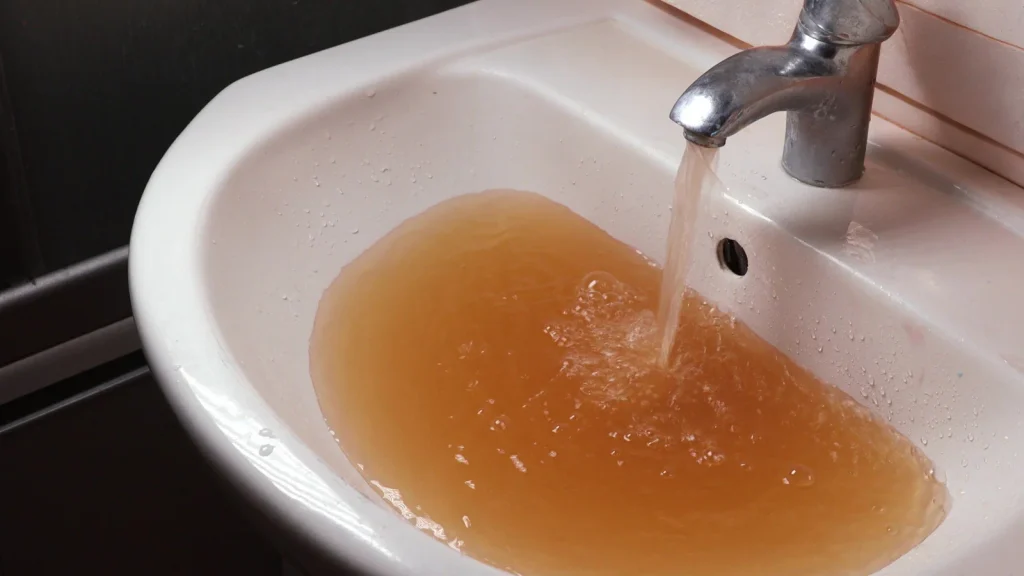
- Iron and Manganese: Clear-water (ferrous) iron oxidizes upon contact with atmospheric oxygen or chlorine, precipitating into reddish-brown particulate (ferric iron). It leaves rust-colored streaks on bathtubs, stains laundry, and breeds iron bacteria that form slimy, gelatinous mats inside toilet reservoirs. Manganese produces comparable stubborn black-brown staining and a bitter, metallic taste at very low thresholds.
- Hardness (Calcium and Magnesium): Water moving through limestone, chalk, or dolomite deposits dissolves significant volumes of calcium and magnesium carbonates. Hard water forms calcified scale inside water heaters, boilers, showerheads, and dishwashers, sharply decreasing thermal efficiency and shortening appliance lifespans.
- Hydrogen Sulfide: Characterized by an unmistakable “rotten egg” odor, hydrogen sulfide gas occurs naturally from decaying organic matter deep within shale or sandstone, or from sulfur-reducing bacteria living within hot water heater anodes and well bores. Although generally harmless at low concentrations, it tarnishes silverware and accelerates plumbing corrosion.
- Chlorides and Sodium: Elevated sodium chloride levels in private wells typically point to heavy winter road-salt runoff, industrial salt storage seepage, or backwash discharge from improperly drained residential water softeners.
For more detailed analysis on maintaining residential infrastructure, structural well sanitation, and safeguarding water purity across private installations, explore the authoritative resources published on the Water Quality Journal.
Environmental and Land-Use Risk Factors
A comprehensive well testing program must adapt to surrounding environmental land uses. Regional geography, neighbor activities, and industrial developments dictate which specialty panels you should append to your annual baseline.
Homeowners situated near commercial agriculture, active orchards, or golf courses must routinely screen for volatile organic compounds (VOCs) and synthetic organic compounds (SOCs), including herbicides, fungicides, and organophosphate pesticides. In industrial regions or parcels bordering older gas stations and machine shops, groundwater should be examined for fuel additives such as methyl tert-butyl ether (MTBE) and chlorinated industrial solvents like trichloroethylene (TCE) and tetrachloroethylene (PCE).
Analogous to suburban homeowners hiring professional home water testing services in Queens to screen for urban soil contaminants and legacy pipe degradation, rural residents must remain vigilant regarding industrial land-use patterns across their surrounding watershed.
Moreover, modern well maintenance protocols must consider per- and polyfluoroalkyl substances (PFAS). Dubbed “forever chemicals” due to their extraordinary environmental persistence, PFAS compounds leach into aquifers from firefighting foams, landfill deposits, and industrial manufacturing runoff. Given their biological bioaccumulation and links to immune suppression and endocrine disruption, properties positioned within several miles of commercial airfields, military bases, or manufacturing centers should order specialized LC-MS/MS testing for PFAS variants.
Radon in Well Water: The Airborne Inhalation Hazard
Radon gas represents a unique groundwater hazard because the primary risk it poses does not stem from direct ingestion. Radon-222 is a colorless, odorless radioactive gas generated by the natural decay of uranium in bedrock. When groundwater containing high dissolved radon enters a home, routine household water usage—such as showering, washing dishes, and running laundry—aerates the liquid, releasing radioactive gas straight into indoor breathing air.
Inhaled radon decay progeny lodge in lung tissue, emitting alpha particles that damage cellular DNA and constitute the second leading cause of lung cancer in the United States after smoking. For every 10,000 picocuries per liter (pCi/L) of radon dissolved in household water, approximately 1 pCi/L of radioactive gas escapes directly into the ambient indoor atmosphere. Property owners drawing water from fractured granite formations should review the official EPA consumer guide to radon to understand airborne mitigation thresholds, water testing protocols, and aeration treatment strategies.
Structural Assessment and When to Test Immediately
While the standard calendar calls for annual testing, structural anomalies, sudden weather events, or alterations in water aesthetics demand immediate diagnostic testing. Do not postpone sample collection until the annual anniversary if you observe any of the following triggering conditions:
- Aesthetic Variations: Any sudden appearance of turbidity, cloudy suspension, rust-tinted discoloration, soapy froth, or unusual earthy, sulfurous, or metallic tastes.
- Severe Storms and Inundation: Torrential rainfall, localized flash flooding, or surface water standing above the top of the sanitary well seal. Floodwaters routinely deliver agricultural waste, raw sewage, and heavy sediments straight down the well casing.
- Physical Wellhead Damage: Lawn equipment impacts, ground settling, cracked sanitary caps, or compromised casing seals that allow surface insects and debris entry.
- Repairs and Construction: Replacement of a submersible pump, line pressure tank replacement, nearby septic tank drain field installations, or heavy earthmoving and drilling operations on neighboring parcels.
- Health Symptoms: Unexplained, recurrent gastrointestinal distress, nausea, or cramping among household members or guests after consuming tap water.
Understanding structural vulnerabilities is particularly critical when dealing with aged construction materials, galvanized well risers, or early-generation plumbing components. Reviewing standard guidelines on water quality in older buildings offers crucial insight into how legacy construction choices impact tap purity over time.
Sample Collection Best Practices and Certified Laboratories
An analytical report is only as reliable as the sampling technique used to gather the water. Improper collection methods produce false positives for bacterial contamination or underestimate volatile chemical compounds.
Always utilize an environmental testing laboratory certified by your state’s Department of Health or the Environmental Protection Agency. Certified laboratories provide clean, specialized sampling containers prepared with appropriate chemical preservatives, such as sodium thiosulfate for bacteriological assays or nitric acid for heavy metal panels.
When collecting samples for heavy metals like lead and copper, collect a “first-draw” sample: gather water from the kitchen tap first thing in the morning after the plumbing has sat completely stagnant for a minimum of six to eight hours. Conversely, when collecting samples for baseline bacteriological, nitrate, and general chemistry evaluations, remove the faucet aerator, sanitize the fixture nozzle with an alcohol swab, and let cold water flush through the line at a steady rate for three to five minutes. This flushes the interior plumbing lines, drawing fresh water directly from the pressure tank and aquifer.
Seal collection containers securely, pack them with cold gel packs in an insulated cooler, and deliver them to the testing facility within 24 to 30 hours of collection. Prompt transit prevents bacterial die-off or chemical changes from skewing the final analytical figures.
Interpreting Results and Implementing Treatment Solutions
Upon receiving your laboratory certificate of analysis, compare your figures against established Primary Drinking Water Standards (health-enforceable limits) and Secondary Drinking Water Standards (aesthetic parameters). If any parameter exceeds safety limits, avoid panic-buying unverified filtration products.
Water treatment is parameter-specific. There is no single universal device capable of resolving every groundwater issue simultaneously. Biological contamination requires well shock chlorination, mechanical casing repairs, and ongoing ultraviolet (UV) disinfection systems. Nitrate removal requires point-of-entry or point-of-use reverse osmosis units or specialized ion-exchange resins. Heavy metals like lead and arsenic necessitate certified filtration media, whole-house catalytic systems, or reverse osmosis arrays. For radon, whole-house diffused bubble aeration remains the gold-standard treatment, stripping gas before it enters residential distribution pipes.
Work with an independent, certified water treatment specialist or consult local university cooperative extension agents to design a tailored system based directly on certified laboratory data. Retest treated water after installing any corrective equipment to verify that your system delivers clean, safe, and balanced water to every tap.