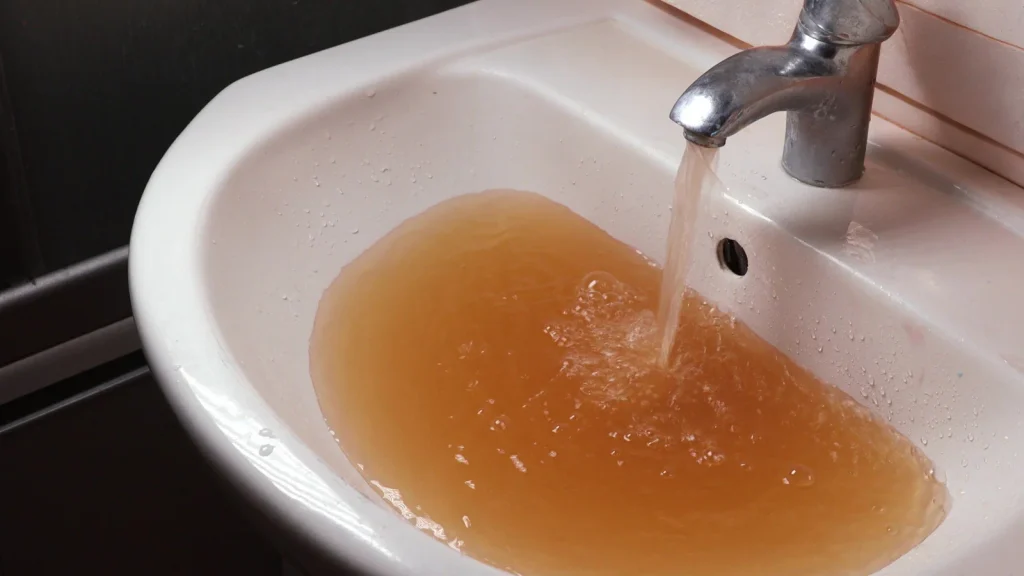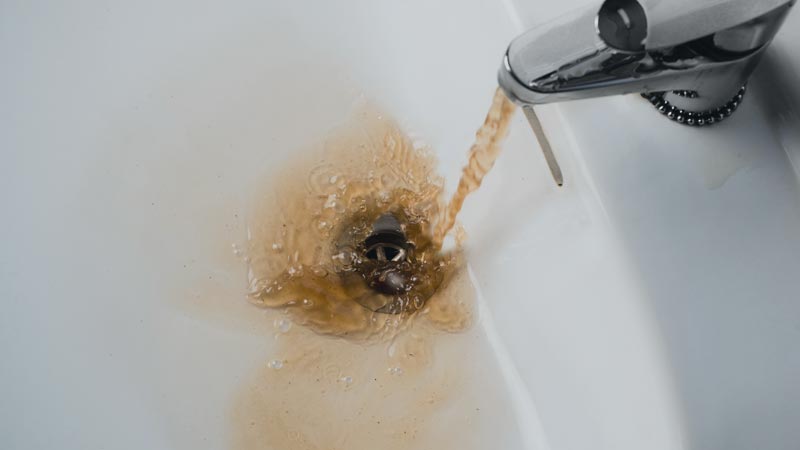
Turning on the kitchen faucet only to discover cloudy water, floating flecks, or gritty buildup at the bottom of a drinking glass is an unnerving experience. Particulate matter entering a domestic plumbing network does more than create an unappealing appearance; it fouls faucet aerators, scores toilet fill valves, degrades washing machine intake solenoids, and accumulates inside water heaters. Understanding where this grit originates and how to arrest it requires a systematic approach to household hydrology.
Sediment refers to any solid, suspended particulate matter carried through a water distribution network. While municipal water utilities work diligently to clarify surface and groundwater supplies, physical infrastructure inevitably sheds material over time. Private wells face an even broader range of geological dynamics. Diagnosing the exact nature of the debris is the critical first step toward implementing a permanent, plumber-approved mechanical remedy.
The Anatomy of Tap Water Sediment: Identifying Suspended Solids
Before selecting filtration hardware, homeowners must examine the physical characteristics of the particles settling in their plumbing fixtures. The color, texture, and behavior of the grit provide immediate clues regarding the source of contamination.
- Black flecks or rubbery specks: These particulates frequently stem from degrading rubber components within the plumbing system itself, such as disintegrating flexible water heater supply hoses, failing gaskets in shutoff valves, or broken O-rings. If the black particles are hard, irregular, and gritty, they are likely manganese dioxide flakes or carbon granules escaping from an unmaintained whole-house filter.
- Reddish-brown or orange grit: This coloration indicates oxidized iron—commonly known as rust. It typically originates from corroded galvanized iron supply lines, cast-iron municipal water mains, or the internal lining of an aging water heater whose sacrificial anode rod has completely depleted.
- Fine sand and silt: Gritty, abrasive particles that sink rapidly to the bottom of a container usually indicate physical soil infiltration. This condition is prevalent in private drilled wells that pull from sandy aquifers or municipal supplies undergoing nearby construction.
- White, chalky flakes: These chips are precipitated mineral scale (calcium carbonate and magnesium carbonate). When hard water is heated, dissolved minerals solidify into crusts along heating elements and tank walls, eventually breaking loose as thermal expansion flexes the plumbing.
For individuals seeking foundational background on how dissolved solids differ from suspended matter, our comprehensive water quality fundamentals guide outlines the physical metrics used by water treatment professionals to evaluate turbidity and total dissolved solids (TDS).
Common Root Causes of Sediment Intrusion
Sediment does not appear without an underlying mechanical, geological, or operational trigger. Pinpointing the event or structural failure responsible for the intrusion narrows down whether the solution lies at the municipal boundary, the wellhead, or within the interior piping.
1. Municipal Main Disturbances and Fire Hydrant Flushing
Municipal water networks operate under high hydraulic pressure within massive distribution grids. Over decades, fine mineral deposits and iron scale settle along the bottom of ductile iron and concrete-lined pipes. When public works crews conduct seasonal fire hydrant flushing, or when an emergency water main break occurs nearby, the sudden change in flow velocity and direction scours the interior of the mains. This dislodges accumulated silt, sending a concentrated slug of brown water straight into connected service laterals.
2. Domestic Water Heater Degradation
Storage-tank water heaters act as unintentional settling basins. Cold water enters through an internal dip tube, depositing micro-sediments onto the bottom of the tank. As burner assemblies or electric elements cycle on and off, minerals bake into hard flakes. Concurrently, older steel tanks rely on a sacrificial magnesium or aluminum anode rod to prevent tank rust. Once this rod dissolves entirely, the steel walls oxidize rapidly, shedding rust chips into hot water lines across the home.
3. Private Well Complications and Aquifer Shifts
Private wells draw raw water directly from bedrock fractures or unconsolidated sand and gravel aquifers. If a well’s continuous-slot screen collapses, corrodes, or was sized incorrectly for the surrounding formation, fine sand enters the intake. Similarly, over-pumping a low-yield well can drop the dynamic water table below the pump intake level, pulling sediment from the bottom of the borehole. Surface runoff can also breach cracked sanitary well seals, washing silt directly into the casing after heavy downpours.
4. Internal Pipe Corrosion and Aging Infrastructure
Homes plumbed prior to the 1970s often contain galvanized steel piping. Over decades, zinc coatings deteriorate, exposing raw steel to dissolved oxygen. The pipe walls gradually corrode from the inside out, forming tuberculation—rough, jagged nodules of rust. Water hammer or routine valve operations dislodge these nodules, sending rust flakes into fixtures.
In high-density metropolitan zones, legacy infrastructure presents specialized risks. Water systems are bound by federal frameworks such as the National Primary Drinking Water Regulations, but individual buildings often retain outdated internal service loops. For example, older buildings undergoing plumbing renovations may experience physical particulate shedding alongside chemical leaching, prompting residents to schedule NYC apartment lead water testing to verify that internal galvanic reactions or solder degradation are not introducing toxic heavy metals alongside visible sediment.
Immediate Action Steps When Particulates Appear
When discolored or gritty water suddenly issues from household taps, hasty troubleshooting can pull debris deeper into delicate appliance mechanisms. Homeowners should execute a structured containment protocol:
- Isolate high-efficiency appliances: Immediately turn off the shutoff valves to washing machines, dishwashers, refrigerator ice makers, and tankless water heaters. Suspended silt rapidly clogs internal inlet mesh screens and can permanently score ceramic mixing cartridges in expensive modern faucets.
- Run an un-aerated fixture: Locate the fixture closest to the water meter or pressure tank—typically an outdoor hose bibb or a basement utility sink without an aerator screen. Open the cold valve fully and let it run for ten to fifteen minutes into a white bucket to evaluate if the supply clears.
- Check neighbor connectivity: If on a municipal supply, check whether adjacent properties are experiencing the same turbidity. Widespread discolored water confirms a main break or municipal maintenance event, meaning the issue must be resolved by the utility before home filtration can function normally.
- Clean aerators and screens: Unscrew the aerators from kitchen and bathroom spouts. Rinse out trapped gravel and soak the components in white vinegar to dissolve calcified scale before reinstalling.
For answers to urgent questions regarding whether discolored water is safe for handwashing or dish sanitation, check our curated water testing and safety FAQ for immediate troubleshooting advice.
Plumber-Approved Mechanical Solutions and Filtration Tactics
Eliminating sediment requires matching the mechanical filtration technology to the specific particle size, water pressure, and flow demand of the residence. Sediment filters are rated by micron size; one micron equals one-thousandth of a millimeter. For context, a grain of fine beach sand measures roughly 100 microns, while silt ranges from 2 to 50 microns.
Spin-Down Separators for Coarse Debris
For homes pulling heavy volumes of coarse sand, large rust flakes, or well grit, a spin-down sediment filter serves as the crucial first line of defense. Installed directly where the main supply enters the building, these units use centrifugal force to spin heavy particles outward against a clear casing, where they settle into a collection basin. A stainless steel mesh screen (ranging from 50 to 200 mesh, or 74 to 297 microns) catches remaining debris.
The primary advantage of a spin-down separator is cleanability. Rather than buying replacement cartridges monthly, the homeowner simply opens a manual or automated flush valve at the base of the unit to purge collected debris to an open drain.
Cartridge-Based Depth and Surface Filters
Downstream of coarse separators, standard cartridge filtration removes the fine silt, microscopic rust, and clay that pass through screens. These cartridges fall into two distinct mechanical configurations:
- Melt-blown polypropylene depth cartridges: These solid, cylindrical filters feature a density gradient that becomes progressively tighter toward the inner core. Large particles are trapped on the outer layers, while fine silts penetrate deeper before being arrested. They are exceptional for variable particle distributions and resist channeling under fluctuating pressure.
- Pleated polyester surface cartridges: Pleated filters provide an expansive surface area designed to catch uniform particulates with minimal pressure drop. Their primary benefit is low flow restriction, making them ideal for high-demand homes with low incoming street pressure. Many pleated varieties can also be rinsed and reused two to three times before disposal.
A standard residential approach involves a “step-down” dual-stage system: a 20-micron pleated pre-filter followed immediately by a 5-micron spun-polypropylene cartridge. This prevents premature blinding of the finer filter, extending the maintenance lifecycle of both units.
Backwashing Media Filters for Extreme Turbidity
When private wells produce severe, persistent turbidity or high concentrations of oxidized ferric iron, manual cartridge replacement becomes economically impractical. Here, plumbing contractors install automatic backwashing sediment systems. These vessels resemble water softeners but contain media such as graded quartz, granular silica, or specialized aluminosilicate (Filter-Ag Plus).
The media bed traps particulates down to 5 microns across its entire depth. At scheduled intervals—typically every few days during the middle of the night—a digital control valve reverses water flow through the tank. The upward surge fluidizes the bed, washing all accumulated silt out through a dedicated drain line before returning to service mode automatically.
Water Heater Flush and Maintenance Protocol
If sediment appears solely when drawing from hot water taps, the water heater is the confirmed reservoir. Flushing the tank annually prevents heating element failure and restores thermal transfer efficiency.
- Turn off power to the water heater (shut off the electrical circuit breaker for electric models; turn the gas control valve to “Pilot” for gas units).
- Shut the cold water intake valve situated above the water heater.
- Thread a standard garden hose to the brass drain valve at the bottom of the tank, routing the opposite end to an exterior drain, sump pit, or heavy-duty bucket.
- Open a hot water faucet on the highest floor of the home to break the interior vacuum, allowing air into the lines.
- Carefully open the tank drain valve. Use caution, as escaping water can cause thermal burns. Allow the tank to drain completely.
- Once empty, open the cold water supply valve in short, thirty-second bursts. The sudden incoming pressure swirls across the bottom floor of the tank, dislodging settled mineral scale and propelling it through the hose. Repeat until the discharge runs entirely clear.
- Close the drain valve, disconnect the hose, reopen the cold supply to fill the tank completely, and bleed air from the fixtures before restoring power or relighting the burner.
Health Considerations and Environmental Regulations
Sediment composed strictly of inert silica sand or calcium carbonate is generally classified as an aesthetic nuisance rather than an immediate biological hazard. However, physical particulates should never be ignored from a health standpoint. High turbidity significantly interferes with water disinfection methods. In private well systems relying on ultraviolet (UV) sterilizers, floating particles create an optical effect known as “shadowing”—shielding pathogens, cysts, and bacteria from the germicidal UV-C light rays.
Furthermore, oxidized metals and scale flakes possess high surface-area porosity, enabling them to adsorb and transport trace chemical contaminants, including toxic metals. Municipal monitoring requirements under the EPA Lead and Copper Rule compliance details reflect the importance of maintaining optimal water chemistry to prevent physical scaling from dislodging alongside heavy metals. Anyone experiencing sudden digestive changes or unexplained health symptoms following water contamination events should consult qualified healthcare professionals or certified water quality specialists rather than assuming physical grit is harmless.
Developing a Proactive Home Maintenance Strategy
Managing particulate intrusion demands routine oversight rather than reactive fixes after an aerator clogs. Plumbing professionals recommend installing clear filter housings equipped with dual pressure gauges—one on the intake side and one on the discharge side. When the differential between the two gauges exceeds 10 to 15 pounds per square inch (PSI), the filter cartridge is saturated and must be swapped out, regardless of how clean it looks from the outside.
Homeowners maintaining complex well heads or aging plumbing infrastructure should explore our comprehensive library of drinking water safety resources to review equipment maintenance schedules, filtration sizing tables, and seasonal inspection checklists. If persistent sediment defies standard spin-down and cartridge approaches, you can contact us to receive guidance on laboratory particulate analysis and custom mechanical remediation strategies.
A resilient, silt-free plumbing system protects costly appliances, ensures optimal water pressure, and preserves the clarity of domestic drinking water. By accurately diagnosing particle composition, safeguarding vulnerable indoor fixtures, and installing appropriately staged mechanical filtration, homeowners can secure pristine water throughout their property. Explore the Water Quality Journal for ongoing investigative reports, practical filtration guides, and up-to-date residential water management insights.