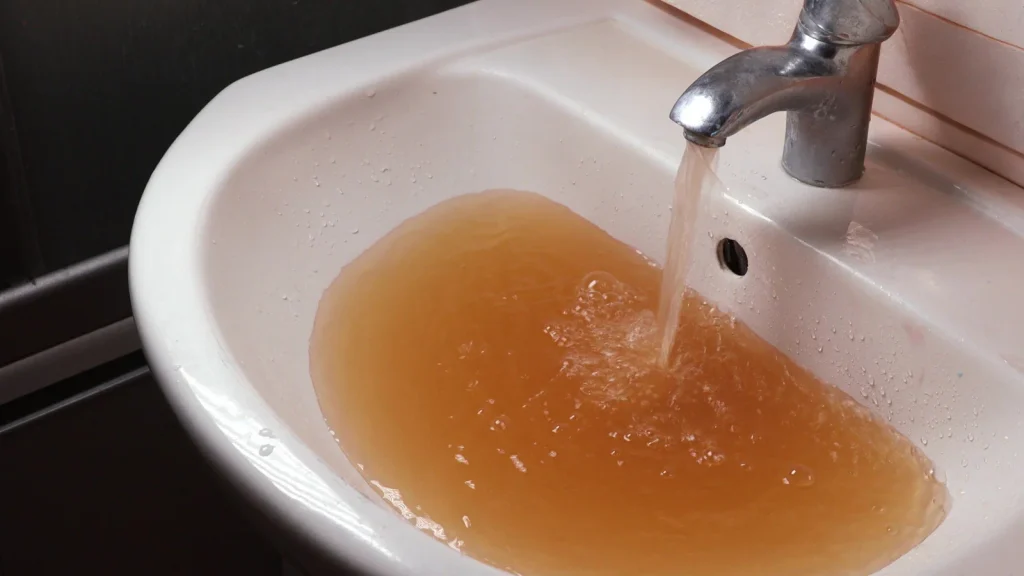
Choosing the right drinking water purification hardware often comes down to an uncomfortable compromise between convenience, upfront cost, and raw filtration performance. When municipal tap water leaves a treatment facility, it may comply with federal standards, but miles of aging utility mains, service lines, and domestic premise plumbing can introduce heavy metals, chlorination byproducts, microplastics, and dissolved minerals into your drinking glass. A detailed look at the Water Quality Journal highlights how municipal treatment protocols vary dramatically across different water districts, leaving final point-of-use (POU) barriers up to individual households.
For most apartment renters, condominium owners, and suburban homeowners, the practical choice narrows down to three primary point-of-use hardware categories: portable countertop pitcher filters, faucet-mounted attachments, and dedicated under-sink filtration systems. While marketing claims on retail packaging frequently promise “pure, crisp water” across all three options, their internal mechanics, media volumes, flow rates, and contaminant retention capabilities differ fundamentally. Understanding these mechanical distinctions prevents homeowners from relying on an undersized gravity cartridge to solve serious municipal contamination issues, or overspending on complex multi-stage plumbing fixtures when simple taste remediation is all that is required.
The Contaminant Spectrum and Point-of-Use Mechanics
Before evaluating hardware formats, it is essential to map the target contaminants commonly found in domestic water supplies. Municipal utilities generally rely on chlorine or chloramines for residual disinfection, leaving behind a persistent chemical odor and taste, alongside regulated disinfection byproducts (DBPs) like trihalomethanes (THMs). Furthermore, structural plumbing materials can introduce dissolved ions, heavy metals, and particulate matter. Homeowners looking to understand the core chemical markers found in residential distribution can explore our water quality fundamentals guide for a breakdown of dissolved solids, turbidity, and mineral hardness.
Filtration media behave according to physical contact time and surface adsorption dynamics. Activated carbon relies on chemical adsorption to capture volatile organic compounds (VOCs), pesticides, and aesthetic chlorine, while ion-exchange resin beads exchange harmless sodium or hydrogen ions for dissolved heavy metal cations like lead, copper, and cadmium. Particulate mechanical filtration depends on pore size, measured in microns, to physically block suspended rust, microplastics, silt, and parasitic cysts such as Cryptosporidium. To better assess your specific risk profile, check this comprehensive overview of common contaminants typically documented in municipal water reports across North America.
When high-density contamination strikes older urban housing stocks, simple carbon adsorption frequently falls short. In pre-war multi-unit properties, utility service lines often consist of legacy lead pipes coupled with brass fixtures containing significant lead content. According to authoritative NIEHS research on lead toxicity and plumbing, chronic low-level lead ingestion poses severe neurodevelopmental hazards to children and elevates cardiovascular risks in adults. Determining whether your plumbing infrastructure requires an aggressive point-of-use barrier starts with empirical data, which is why property managers and tenants often turn to specialized residential lead water testing for Manhattan buildings before settling on a permanent hardware configuration.
Hardware Option 1: Gravity Pitcher Filters
Gravity-fed pitcher filters represent the lowest financial barrier to entry in residential water filtration. These self-contained vessels use a drop-in cartridge suspended inside an upper reservoir. When tap water is poured into the top chamber, gravity slowly draws the liquid downward through the media bed into the lower carafe.
Internal Anatomy and Filtration Media
Because gravity-fed systems operate without hydraulic water pressure, their media beds cannot be packed tightly without stalling water flow entirely. Standard pitcher cartridges consist of loose granular activated carbon (GAC) derived from coconut shells, interspersed with weak-acid ion-exchange resin spheres. Premium alternatives employ compressed carbon fiber blocks or blended non-woven membrane wraps designed to extend physical contact time within a compact form factor.
Operational Pros and Inherent Limitations
- Portability and Zero Plumbing: Pitchers require zero tool installation, no plumbing modifications, and operate independently of sink configurations, making them ideal for dorm rooms, temporary leases, and office kitchenettes.
- Low Initial Capital: A standard pitcher setup costs between $25 and $80, offering an accessible starting point for improving taste and reducing chlorine.
- Severe Contact-Time Bottlenecks: Because water channels through loose granules along the path of least resistance (channeling), filtration consistency drops dramatically over the cartridge life.
- Limited Volume and Slow Throughput: Producing a single half-gallon of filtered water takes anywhere from 5 to 15 minutes, limiting real-time usage for cooking, filling stockpots, or large families.
- Frequent Replacement Overhead: Most gravity cartridges saturate after filtering 40 to 120 gallons (roughly 2 to 8 weeks of standard household use), causing annual operational costs to eclipse the initial hardware savings.
Hardware Option 2: Faucet-Mounted Filters
Faucet-mounted filtration hardware attaches directly to the threaded aerator tip of a standard kitchen spout. These units feature an integrated mechanical diverter valve that allows users to toggle between unfiltered municipal water for dishwashing and treated water for drinking and food preparation.
Internal Anatomy and Hydraulic Dynamics
Unlike gravity pitchers, faucet filters utilize line pressure (typically between 30 and 60 PSI) provided by municipal distribution. This available water pressure allows manufacturers to utilize denser, compressed solid carbon blocks rather than loose granules. Water is forced radially from the outer perimeter of the cylindrical block through microscopic pores toward a central core, achieving sub-micron mechanical filtration capable of trapping sediment and microplastics while adsorbing chemical contaminants.
Operational Pros and Inherent Limitations
- Instant Flow on Demand: Users receive treated water immediately at rates around 0.5 to 0.75 gallons per minute (GPM), eliminating the wait time associated with pitcher carafes.
- Compact Footprint: Faucet units preserve precious refrigerator shelf space and eliminate bulky countertop equipment.
- Ergonomic and Fixture Vulnerabilities: Hanging weight from the faucet aerator threads places continuous physical torque on the spout assembly, which can loosen older fixtures or crack decorative pull-out spray wands.
- Aesthetic and Splash Issues: Faucet-mounted attachments sit directly in the sink work area, reducing clearance for washing large pans, baking sheets, and cutting boards.
- Temperature Sensitivity: Accidental diversion of scalding hot water through a carbon block can instantly flush adsorbed organic contaminants back into the effluent stream or melt internal gaskets.
Hardware Option 3: Under-Sink Systems
Under-sink systems mount out of sight inside the cabinet below the kitchen counter, tying directly into the cold-water shutoff line via a dedicated feed-water adapter. These systems range from high-capacity inline multi-stage carbon block assemblies to complex reverse osmosis (RO) units equipped with semi-permeable membranes, pressurized bladders, and dedicated air-gap dispensing faucets.
For historic residential structures and commercial hospitality settings dealing with intricate pipe distribution, under-sink units provide the necessary hydraulic power and multi-barrier protection required to eliminate dangerous heavy metals and chemical residuals. In commercial accommodation properties where municipal water lines interface with decades of internal retrofits, building operators routinely contract certified water testing services for hotels in Manhattan to verify that multi-barrier point-of-use systems are meeting strict safety and aesthetic benchmarks across guest suites.
Internal Anatomy and Multi-Stage Architecture
Under-sink hardware leverages commercial-grade, multi-stage cartridge configurations. Water enters a primary spun-polypropylene sediment stage (5 to 1 micron) to strip rust, sand, and pipe scale. Next, it passes through specialized extruded catalytic carbon blocks engineered to strip stubborn chloramines and industrial solvents. In reverse osmosis configurations, the water is then forced under household line pressure through a 0.0001-micron semi-permeable thin-film composite (TFC) membrane, which rejects up to 98% of total dissolved solids (TDS), including nitrates, fluoride, and complex heavy metals.
In regions reliant on deep private wells or municipalities facing natural mineral leaching, dense under-sink systems represent the only reliable POU defense against dissolved toxins. For instance, comprehensive NIEHS environmental health data on arsenic highlights the chronic carcinogenicity of inorganic arsenic in untreated drinking water, a dissolved metalloid that easily bypasses basic pitcher cartridges and faucet attachments, necessitating the tight rejection barrier of under-sink reverse osmosis or specialized adsorption media.
Operational Pros and Inherent Limitations
- Unmatched Contaminant Removal: Multi-stage under-sink units carry NSF/ANSI certifications 42, 53, 58, and 401, tackling everything from PFAS “forever chemicals” to dissolved radioactive isotopes.
- Massive Filter Longevity: Under-sink cartridges typically last between 6 and 12 months, with reverse osmosis membranes functioning effectively for 2 to 4 years before requiring changeouts.
- Dedicated Dispensing Faucets: By separating drinking water from the main utility faucet, under-sink systems conserve filter capacity exclusively for consumption while preserving primary sink utility.
- Complex Installation Requirements: Installing an under-sink system involves tapping into household plumbing, accommodating a pressurized storage tank, running wastewater discharge lines (for RO), and potentially drilling a hole in stone countertops for the dedicated tap.
- Higher Upfront Expense: High-performance under-sink systems command initial hardware investments ranging from $200 to $700, exclusive of professional plumbing labor.
Head-to-Head Performance and Practical Comparison
Evaluating these three platforms side-by-side demonstrates that filtration efficacy scales directly with media surface area, pressure, and transit time. While budget-friendly carafes offer an easy aesthetic upgrade, their physical limitations become apparent when contrasted with dedicated under-counter hardware.
1. Contaminant Removal Efficiency
Basic gravity pitchers generally excel at aesthetic chlorine reduction, clearing out foul tastes and municipal odors. Select advanced pitcher brands have achieved NSF 53 certifications for lead and PFOA/PFOS reduction, but their performance drops off sharply as the granular bed compacts. Faucet filters achieve superior mechanical particulate retention and dependable VOC adsorption due to their solid carbon blocks. However, neither pitchers nor faucet attachments can match the deep chemical, microbiological, and ionic extraction provided by multi-stage under-sink systems, particularly those incorporating reverse osmosis and catalytic carbon.
2. Flow Rate and Kitchen Utility
Pitcher filters offer zero on-demand throughput; you must plan ahead and wait for gravity percolation. Faucet filters deliver immediate water at roughly 0.5 to 0.8 GPM, which is suitable for filling drinking glasses but frustrating when filling large stockpots for pasta. Under-sink inline filters deliver full line-pressure flow (often 1.5 to 2.2 GPM) directly through the cold line or at an impressive 0.8 to 1.0 GPM through a dedicated lead-free tap, easily satisfying busy residential cooking workflows.
3. Long-Term Maintenance and True Cost of Ownership
While an under-sink system carries an intimidating initial price tag, its cost-per-gallon is remarkably low, frequently averaging $0.03 to $0.08 per gallon over a multi-year cycle. Conversely, gravity pitchers seem inexpensive off the shelf, but replacement cartridges costing $8 to $20 every six weeks quickly push long-term operating costs past $0.25 to $0.40 per gallon for active families. Faucet filter cartridges occupy a middle ground, but their small internal volume leads to frequent saturation, particularly when incoming water exhibits high sediment turbidity.
Selecting the Ideal System for Your Living Situation
Determining which water treatment setup fits your home demands balancing structural living conditions against specific water quality challenges. If you live in a pre-war apartment, managing legacy plumbing variables requires strategic thought; our analysis of water quality in older buildings details how century-old galvanized pipes and lead soldering influence hardware selection.
- Renters and Frequent Movers: When lease agreements prohibit modifying under-sink plumbing or drilling into granite counters, countertop pitchers or faucet-mounted attachments represent the only practical choices. If your faucet features standard exterior aerator threading and you cook frequently, a faucet-mounted solid carbon block provides the best combination of throughput and contaminant reduction.
- Small Space Dwellers: For tiny studio apartments or dormitories with pull-out designer faucets that lack standard aerator threads, high-capacity gravity pitchers with certified lead and VOC media remain the gold standard of non-invasive water treatment.
- Homeowners and Long-Term Lessees: If you own your residence or have permission to modify cabinetry plumbing, an under-sink system delivers unmatched water purity, superior aesthetics, and virtually silent operation. It protects expensive kitchen fixtures from mineral fouling and supplies continuous, safe water for drinking, food preparation, and infant formula.
If you have tested your tap water and discovered elevated heavy metals, microbial threats, or unmanageable levels of total dissolved solids, do not rely on undersized hardware to protect your family. For personalized advice on tailoring an under-sink setup or selecting certified filtration media for complex plumbing topologies, you can contact us directly for comprehensive technical assistance. Pair certified hardware with routine independent laboratory testing to verify that your chosen defense keeps your tap water clean, safe, and balanced year after year.