When you pour a glass of tap water, clarity is often mistaken for purity. Clear, odorless water can still harbor an intricate mix of dissolved minerals, synthetic industrial chemicals, biological pathogens, and heavy metals. Across municipal supply networks and private groundwater wells alike, drinking water journeys across complex geological formations, agricultural acreage, and aging distribution pipelines before it ever reaches a residential faucet. Every mile of that journey exposes water to potential sources of pollution, some occurring through natural rock weathering and others stemming from modern industrial production or degrading civic infrastructure.
Understanding what might be present in municipal or well water requires examining the physical, chemical, and biological mechanisms that introduce pollutants into the water cycle. While national utility standards maintain baseline safety, no distribution network is completely immune to localized contamination events, chemical leachates, or seasonal runoff. Grounding your household safety in reliable information begins with exploring a comprehensive water quality fundamentals guide that demystifies how raw source water transforms into treated municipal tap water, and where vulnerabilities persist along the supply chain.
Heavy Metals and Corrosion Byproducts
Heavy metals represent one of the most persistent categories of drinking water pollutants because they do not break down over time. Unlike biological contaminants that can be neutralized by temperature or chemical oxidants, dissolved metals persist indefinitely in water systems until physically filtered or chemically precipitated out.
Lead and Copper: The Infrastructure Legacy
Lead and copper rarely originate in source water reservoirs or pristine aquifers. Instead, they enter household water systems via post-treatment leaching as water passes through utility service lines, private plumbing, interior brass fixtures, and soldered pipe joints. When municipal water systems fail to maintain adequate corrosion control chemistry—such as orthophosphate dosing or tight pH management—slightly acidic or oxygenated water strips metallic ions directly from pipe walls.
Lead poses severe neurodevelopmental hazards, particularly for infants, young children, and pregnant women. Because blood-lead accumulation causes irreversible cognitive impairment and kidney strain, public health guidelines emphasize that there is no established safe blood level of lead in children. Property owners confronting century-old utility connections frequently consult official EPA guidance on lead service line replacement to coordinate remediation with municipal utilities and eliminate toxic lead intakes at the property line.
Copper leaching produces distinct greenish-blue staining around plumbing fixtures, sinks, and drains. While copper is an essential dietary trace mineral, acute ingestion of elevated copper concentrations from corroded piping triggers gastrointestinal distress, vomiting, and nausea, while chronic exposure stresses liver and renal function.
Arsenic: Natural Geological Weathering
Arsenic is a naturally occurring element deeply embedded in the earth’s crust. As groundwater percolates through bedrock formations containing arsenopyrite and volcanic deposits, arsenic dissolves into underground aquifers. Deep bedrock private wells are particularly prone to high arsenic concentrations, as stagnant groundwater experiences extended contact time with mineral-rich formations. Long-term ingestion of inorganic arsenic is classified as a primary human carcinogen, strongly linked to bladder, lung, and skin cancers, as well as peripheral neuropathy and skin lesions.
Because subterranean leaching patterns vary significantly between neighboring streets and geological pockets, property owners seeking precise local data often rely on certified Bronx residential water testing specialists to identify heavy metal variations that standard consumer filtration pitchers fail to capture.
Industrial Chemicals and Emerging Contaminants
Modern industrial chemistry has produced thousands of synthetic molecules designed for heat resistance, chemical inertness, and durability. Unfortunately, these exact traits make synthetic chemicals extraordinarily difficult to remove through conventional water treatment technologies.
Per- and Polyfluoroalkyl Substances (PFAS)
Widely designated as “forever chemicals,” PFAS are a class of thousands of synthetic fluorinated organic compounds found in aqueous film-forming foams (used in aviation firefighting), non-stick cookware coatings, stain-resistant carpeting, and food packaging. Because the carbon-fluorine chemical bond is among the strongest in organic chemistry, PFAS do not degrade under normal environmental conditions. Industrial discharges, military base fire-training runoff, and landfill leachate steadily seep downward into regional aquifers.
Once ingested, PFAS bioaccumulate in human serum and tissues, binding to blood proteins and circulating through organs for years. Epidemiological research links prolonged exposure to elevated cholesterol, reduced immune response to routine vaccines, thyroid dysfunction, and increased incidences of kidney and testicular cancers. Regulatory agencies have steadily tightened municipal monitoring thresholds, driving widespread adoption of the latest EPA guidelines on PFAS in drinking water to help municipal operators and facility managers upgrade to activated carbon and ion-exchange polishing stages.
Volatile Organic Compounds (VOCs)
Volatile Organic Compounds encompass a broad range of carbon-based industrial chemicals, including trichloroethylene (TCE), benzene, tetrachloroethene (PCE), and gasoline oxygenates like MTBE. These substances enter drinking water through illegal chemical disposal, leaking underground storage tanks (USTs) at commercial fuel stations, dry-cleaning solvent discharges, and industrial manufacturing runoff.
Because VOCs possess low molecular weights and evaporate readily into the ambient air, hot showers and dishwashers can turn waterborne VOCs into airborne inhalation hazards within enclosed spaces. Chronic exposure damages the central nervous system, stresses liver function, and increases lifelong oncological risks.
Agricultural Runoff: Nitrates, Phosphates, and Pesticides
Agricultural operations represent the leading nonpoint source of surface water and shallow aquifer contamination across North America. The intensification of crop farming and concentrated animal feeding operations (CAFOs) places tremendous chemical loads on rural soils.
Nitrate and Nitrite Contamination
Nitrates enter waterways when synthetic nitrogen fertilizers and animal manure are applied to agricultural fields in volumes exceeding crop absorption capacity. Heavy rainfall flushes these water-soluble compounds down through the soil profile into shallow aquifers or across drainage basins into rivers and lakes. Rural private wells placed near agricultural zones are especially susceptible to seasonal nitrate spikes.
Ingesting excessive nitrates is uniquely hazardous to infants under six months of age. In the digestive tract, nitrate converts to nitrite, which oxidizes iron in red blood cell hemoglobin to create methemoglobin. This compound cannot bind oxygen, precipitating a dangerous condition known as methemoglobinemia, or “blue baby syndrome,” which produces tissue hypoxia and asphyxiation if untreated. For older children and adults, high nitrate levels have been investigated for potential links to thyroid disruption and elevated colorectal cancer risks.
Pesticides and Herbicides
Synthetic herbicides (such as atrazine, glyphosate, and 2,4-D) and commercial insecticides wash into catchment basins following seasonal aerial spraying and soil applications. Many of these formulations act as endocrine disruptors, mimicking or blocking hormones in human and animal reproductive systems. To understand how synthetic agrochemicals compare against other classes of industrial waste, homeowners should review this detailed overview of common contaminants detailing regulatory maximum contaminant levels (MCLs) and relative chemical persistence.
Microbiological Pathogens and Distribution Risks
Microbiological contamination represents the most immediate, acute threat to public health. While chemical contaminants typically inflict damage through chronic consumption over years, waterborne biological pathogens can incapacitate an entire community within forty-eight hours.
Bacteria, Viruses, and Parasitic Protozoa
Fecal contamination from failed septic leach fields, municipal sewage overflows, wildlife, and livestock feedlots introduces dangerous microscopic organisms into source waters:
- Escherichia coli (E. coli) and Salmonella: Bacterial organisms that trigger acute gastroenteritis, abdominal cramps, severe dehydration, and, in virulent strains, hemolytic uremic syndrome.
- Cryptosporidium and Giardia lamblia: Microscopic protozoan parasites that form hard, protective oocysts and cysts. These outer shells make them exceptionally resistant to standard chlorine disinfection dosages, requiring physical microfiltration or ultraviolet (UV) irradiation to neutralize.
- Enteroviruses and Norovirus: Extremely small viral pathogens capable of bypassing coarse sand filters and surviving in cold, dark groundwater reservoirs for extended periods.
When municipal distribution pipes suffer sudden pressure drops—known as back-siphonage or cross-connections—external pathogens can be drawn directly into drinking mains through cracks and compromised seals. During unexpected line breaks, severe floods, or storm surges, residents must immediately follow established EPA emergency disinfection procedures, bringing tap water to a rolling boil or utilizing controlled chemical sanitizers to deactivate viable pathogens before consumption.
Facility managers and multi-family residential owners responsible for high-volume plumbing systems frequently engage commercial water testing services in Queens to run rigorous certified pathogen screenings, biofilm assays, and hydraulic balance tests that safeguard thousands of daily occupants.
Disinfection Byproducts (DBPs): The Chemistry of Water Treatment
Ironically, some of the most widespread chemical contaminants in municipal tap water are the unintended side products of life-saving municipal sanitation efforts. In order to protect municipal populations against cholera, typhoid, and dysentery, water treatment plants add chlorine, chloramines, or chlorine dioxide as disinfectant agents.
Trihalomethanes and Haloacetic Acids
When municipal utilities introduce chlorine into raw source water containing decaying leaves, algae, and humic soil acids (known collectively as natural organic matter, or NOM), chemical side reactions occur. The chlorine molecules react with organic precursors to create disinfection byproducts (DBPs), the two most prevalent groups being Total Trihalomethanes (TTHMs, including chloroform) and Haloacetic Acids (HAAs).
Water utilities must constantly balance chemical disinfection to kill bacteria while simultaneously minimizing DBP generation. Chronic consumption of water with elevated TTHM and HAA concentrations over decades correlates with increased risks of bladder cancer, liver damage, and reproductive complications, including low birth weights. Installing activated carbon block filters at the kitchen point-of-use effectively adsorbs these volatile chlorine compounds before they reach your glass.
Plumbing Materials, Aging Buildings, and Secondary Leaching
Even when a central municipal water treatment authority pumps clean, compliant water into the municipal distribution mains, water quality can degrade significantly inside private property lines. The materials that make up interior plumbing systems act as a final, highly influential treatment reactor.
Historic structures constructed before modern plumbing code revisions present particular vulnerabilities. Lead-soldered copper pipes (common prior to 1986), unlined galvanized iron supply lines, and early zinc-coated steel materials actively degrade internally. As galvanized zinc coatings corrode, they release accumulated lead, cadmium, and rust particles directly into circulating water. Property investors, landlords, and homeowners can explore targeted architectural risks in this guide to water quality in older buildings, which explains how low-flow fixtures and water stagnation worsen internal metal concentrations.
Stagnation inside residential pipes overnight creates prime conditions for secondary leaching. When water sits stationary in brass faucets or copper lines for six to eight hours, the concentration of dissolved metals climbs exponentially. Flushing cold water for two minutes every morning remains a simple, non-structural measure that purges sitting water and lowers instantaneous metal exposure.
Physical Sediments and Aesthetic Concerns
Not all water contaminants represent direct toxicological emergencies; many present physical and aesthetic problems that degrade plumbing components, shorten water heater lifespans, and harbor protective micro-environments for bacteria.
- Silt, Clay, and Particulates: Suspended soils wash into surface reservoirs during severe erosion events and construction work, increasing turbidity and inhibiting the germicidal penetration of ultraviolet treatment units.
- Dissolved Calcium and Magnesium (Hard Water): Hard minerals precipitate out of solution under thermal stress, coating heating elements with thick scale and reducing boiler thermal efficiency.
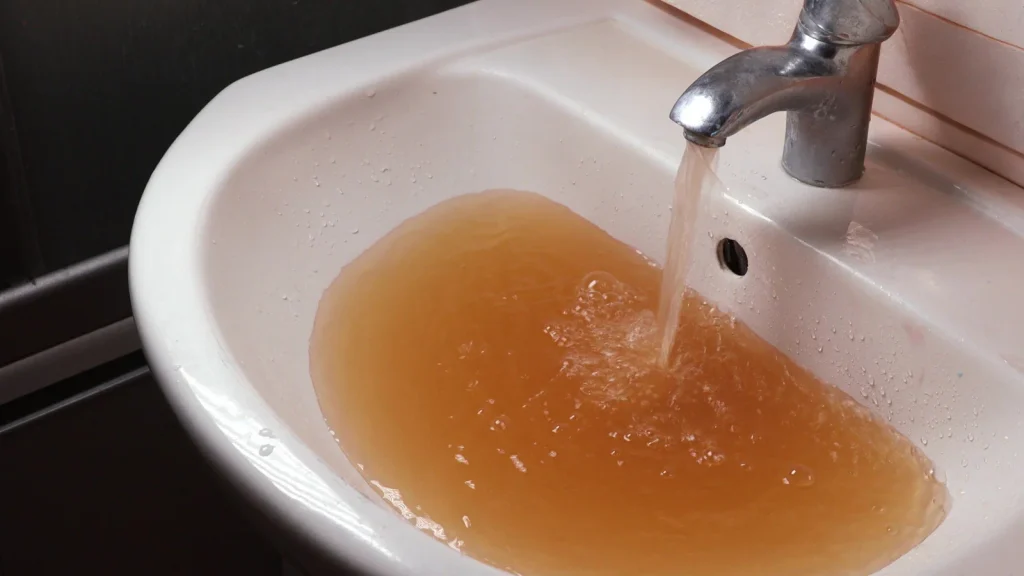
- Iron and Manganese: These naturally occurring metals impart a metallic taste to drinking water, stain ceramic bathtubs and porcelain fixtures with brown or black deposits, and support the proliferation of harmless but nuisance iron bacteria that form slimy biofilms inside toilet tanks.
For more detailed technical reviews of filtration methodologies, filtration media comparisons, and ongoing investigative field reporting, readers can browse independent water quality blog articles that analyze real-world water challenges across urban and rural watersheds.
Actionable Steps for Diagnosing and Treating Drinking Water
Assessing and improving your tap water requires an orderly diagnostic approach. Blindly purchasing expensive countertop appliances or whole-home filtration systems without documented water metrics often results in mismatched treatment technology that fails to address actual target contaminants.
- Obtain the Annual Consumer Confidence Report (CCR): If you use municipal tap water, your utility must provide an annual water quality report documenting average testing results for regulated contaminants and indicating any regulatory violations during the past calendar year.
- Conduct Independent Laboratory Testing: Municipal CCR reports reflect water quality when it exits the central treatment facility, not the water exiting your specific kitchen faucet. Private well owners and residents in older buildings should have samples tested by a state-certified environmental testing laboratory. Focus on panel screenings that capture total coliform bacteria, nitrates, lead, copper, arsenic, and total dissolved solids.
- Match Treatment Tech to Specific Pollutants: No single filter technology neutralizes every contaminant. Reverse osmosis (RO) systems excel at removing dissolved heavy metals, nitrates, and PFAS, but strip beneficial minerals. Solid carbon block filtration removes chlorine, DBPs, VOCs, and improves taste. Ultraviolet (UV) disinfection units neutralize bacteria and viruses without chemicals, provided the incoming water is free of sediment.
- Maintain Filtration Media Diligently: An unmaintained filter is worse than no filter at all. Saturated carbon filters become breeding grounds for heterotrophic bacteria, while fouled reverse osmosis membranes tear and release concentrated contaminants directly into treated reservoirs.
For additional details regarding sampling techniques, bottle preservation requirements, and lab certifications, consult this straightforward water testing and safety FAQ to ensure your water samples yield accurate, actionable data. Taking a proactive, diagnostic approach to water testing empowers you to verify what is actually flowing from your plumbing fixtures and choose treatment systems tailored precisely to your property’s water profile.