Choosing a Whole-House Water Filter: What to Consider
Investing in a point-of-entry (POE) water filtration system represents one of the most substantial infrastructure upgrades a property owner can make. Unlike countertop pitchers or under-sink units designed solely for drinking and cooking, a whole-house filter treats every drop entering your plumbing network. From the water that fills your morning kettle to the moisture cycling through your steam shower, dishwasher, and washing machine, centralized treatment safeguards physical assets, mechanical equipment, and daily household well-being.
Because domestic plumbing operates as an integrated mechanical ecosystem, selecting the appropriate treatment setup requires an analytical engineering mindset. Installing the wrong configuration can restrict water pressure, fail to address underlying contaminants, or create premature fouling inside downstream appliances. Navigating the modern market requires evaluating your incoming water chemistry, flow requirements, filtration mechanics, and total cost of ownership. Reviewing comprehensive water quality blog articles can help you track evolving filtration standards before committing to major plumbing retrofits.
Start with Empirical Diagnostics: Analyzing Your Water Chemistry
A common misstep among homeowners is purchasing a filtration unit based on generic product marketing rather than verifiable water data. Filtration media are engineered to target specific chemical compounds, physical particles, and biological entities. A system designed to remove chlorine and volatile organic chemicals will perform poorly against dissolved heavy metals, hard minerals, or microbial pathogens.
If your property draws from a municipal utility, start by reviewing your local Consumer Confidence Report (CCR). Utilities publish these annual disclosures to detail regulatory compliance and average contaminant levels at the municipal treatment plant. However, CCR data does not account for the degradation that occurs inside aging distribution mains or service lines connecting the street to your foundation. Heavy metals like lead and copper frequently leach from older solder joints and legacy pipes long after water leaves municipal reservoirs. You can inspect the NIEHS research on lead toxicity and plumbing to understand the structural risks associated with legacy piping infrastructure.
For private well owners, empirical laboratory diagnostics are mandatory. Well water fluctuates based on seasonal rainfall, agricultural runoff, and subterranean geological shifts. Routine independent lab testing identifies coliform bacteria, nitrates, sulfates, total dissolved solids (TDS), iron, and pH imbalances. Consulting qualified Manhattan water testing experts can provide calibrated sampling protocols to pinpoint obscure volatile chemicals and secondary contaminants before selecting filtration hardware.
Private testing also clarifies whether your supply contains emerging synthetic pollutants. Persistent per- and polyfluoroalkyl substances (PFAS) have become a widespread concern across both urban and rural aquifers. Evaluating current ATSDR clinical and environmental PFAS guidance highlights why targeted filtration technologies, such as specialized granular activated carbon or dense catalytic media, are necessary to capture these resilient synthetic chemicals.
Assessing Hydrodynamic Requirements: Flow Rate and Pipe Sizing
Selecting whole-house treatment is as much an exercise in fluid dynamics as it is in chemistry. A filter that purifies water thoroughly but throttles dynamic pressure creates an unsatisfactory household experience. Every point-of-entry system introduces friction loss into the domestic water line. Calculating your peak demand prevents sudden drops in line pressure when multiple fixtures run simultaneously.
Peak Flow Rate Calculations (Gallons Per Minute)
Peak household demand is measured in gallons per minute (GPM). To size your unit correctly, tally the simultaneous fixture usage likely to occur during peak morning or evening hours:
- Standard bathroom sink: 1.0 to 2.2 GPM
- Modern low-flow showerhead: 1.5 to 2.5 GPM
- High-output multi-head luxury shower: 4.0 to 8.0 GPM
- Automatic dishwasher: 2.0 to 4.0 GPM
- High-efficiency washing machine: 3.0 to 5.0 GPM
- Outdoor hose bib: 3.0 to 6.0 GPM
A typical three-bedroom home with two and a half bathrooms generally requires a continuous service flow rate between 10 and 15 GPM. Larger properties featuring soaking tubs, irrigation feeds, or high-volume rainfall fixtures may demand 20 GPM or higher. Sizing down to save on upfront equipment costs is a common design failure that causes pressure drops and channel blowouts across internal filter media.
Matching Main Line Diameter and Minimizing Pressure Drop
Check the internal diameter of your incoming water main. Residential mains typically measure 3/4-inch or 1-inch, while larger suburban homes or multi-family properties often feature 1.25-inch to 2-inch supply lines. Your chosen filtration system should match the port sizing of your supply line. Bottlenecking a 1-inch supply line down into a 3/4-inch filter manifold induces substantial turbulence and hydraulic resistance. Reviewing a detailed water testing and safety FAQ will help you align domestic flow parameters with correct valve sizing.
Complex distribution loops in multi-family dwellings present unique hydrodynamic challenges, where pressure fluctuations can compromise shared risers and booster pumps. Performing professional water testing for apartment buildings in Queens ensures that centralized multi-stage systems maintain regulatory backflow isolation and hydraulic balance across multiple vertical zones without starving upper-floor occupants of operational pressure.
Core Filtration Technologies: Comparing Treatment Media
Different contaminants require distinct treatment mechanisms. Most whole-house installations employ a sequential multi-stage design to address physical debris, dissolved chemicals, and microbiological risks systematically.
1. Mechanical Sediment Filtration
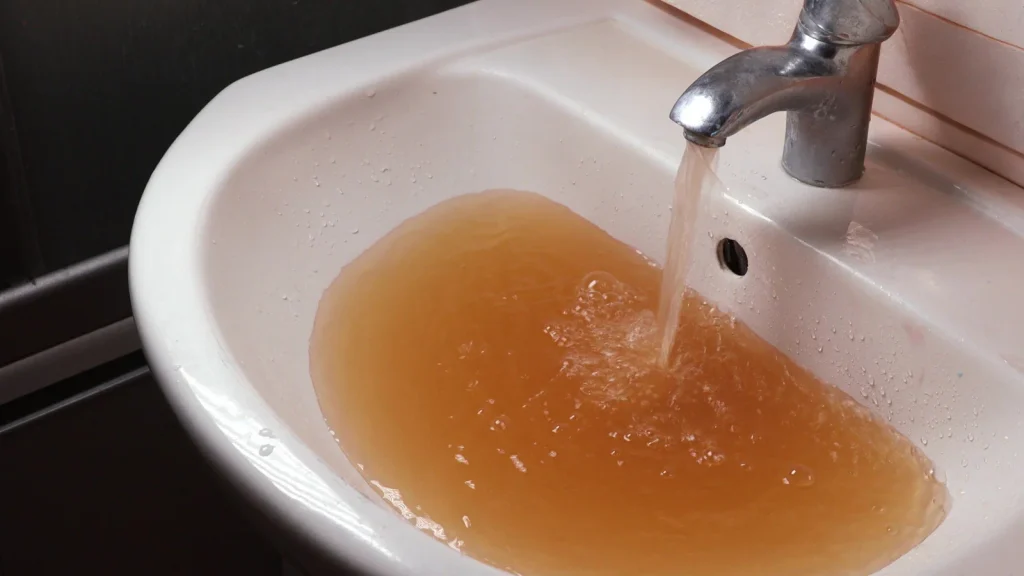
Sediment stages serve as the primary defensive barrier for any whole-house configuration. Constructed from pleated polyester, spun polypropylene, or wound ceramic cartridges, these filters capture suspended physical debris like silt, clay, sand, pipe scale, and rust particles. By stripping out abrasive particulate matter at the 5-micron to 20-micron threshold, sediment filters prevent premature clogging of expensive downstream carbon beds, ion-exchange resins, and sensitive appliance solenoid valves.
2. Activated Carbon and Catalytic Carbon Media
Activated carbon utilizes adsorption to pull volatile organic compounds (VOCs), pesticides, industrial solvents, chlorine, and taste-impairing disinfection byproducts from the water stream. For properties served by municipal networks that treat water with chloramines—a persistent combination of chlorine and ammonia—standard activated carbon is insufficient due to sluggish reaction kinetics. Catalytic carbon, an engineered variant with modified surface structures, provides the rapid catalytic reduction needed to break chloramine bonds effectively at higher flow rates.
3. Ion-Exchange Water Softeners vs. Salt-Free Conditioners
Hard water contains elevated concentrations of dissolved calcium and magnesium. Left unaddressed, these minerals precipitate out under thermal stress, coating the heat exchangers of tankless water heaters and restricting internal pipe diameters with rock-hard scale:
- Traditional Ion-Exchange Softeners: Use polystyrene beads charged with sodium or potassium ions. As hard water passes through, hardness minerals physically displace the sodium ions, eliminating scale-forming minerals from the discharge stream entirely.
- Template Assisted Crystallization (TAC): Salt-free conditioners do not extract minerals. Instead, microscopic polymer surfaces convert dissolved calcium and magnesium into inert, crystalline nano-structures that stay suspended in the stream without binding to copper, PEX, or heating elements.
4. Ultraviolet (UV) Microbiological Disinfection
For rural properties or buildings operating on surface water catchment, chemical and physical filtration must be paired with biological protection. Ultraviolet disinfection systems expose the clear water column to germicidal UV-C light (typically calibrated to 254 nanometers). This wavelength penetrates the cell walls of bacteria, viruses, and protozoan cysts like Giardia and Cryptosporidium, disrupting their reproductive DNA without introducing chemical byproducts. UV systems require crystal-clear pre-filtration, as any lingering turbidity allows organisms to shield themselves behind floating particles.
Cartridge Arrays vs. Backwashing Tank Systems
Whole-house filtration systems generally fall into two structural architectures: heavy-duty modular drop-in cartridge arrays or automated backwashing mineral tanks.
| Feature / Parameter | Drop-In Cartridge Systems | Backwashing Tank Systems |
|---|---|---|
| Initial Capital Cost | Low to moderate | Moderate to high |
| Mechanical Footprint | Compact; wall-mounted | Substantial; requires floor clearance |
| Operating Media Lifespan | 3 to 12 months per cartridge | 5 to 10 years for bulk media beds |
| Power Requirements | None (passive line pressure) | Requires 110V/120V dedicated outlet |
| Drainage Infrastructure | None required | Requires dedicated wastewater air gap |
| Maintenance Burden | Manual cartridge housing servicing | Automated cycle; intermittent valve rebuilds |
Drop-in cartridge arrays—commonly referred to as “Big Blue” housings—use standardized 4.5-inch by 10-inch or 4.5-inch by 20-inch cylindrical filter cartridges. They are flexible, simple to configure in modular stages, and feature low upfront installation costs. However, they require manual filter replacements every few months, which can be demanding in homes with elevated sediment levels.
In contrast, automated backwashing tanks house large volumes of loose media inside a tall fiberglass structural cylinder. An electronic control valve installed at the tank collar periodically reverses water flow, fluidizing the media bed to flush trapped sediments down a sanitary sewer line. While backwashing systems require higher upfront investment and access to electrical and drainage hookups, they deliver superior contact time, handle heavy contaminant loads, and operate for years without manual intervention.
Certifications and Independent Verification Standards
Plumbing products should carry accredited, third-party performance verifications. Never accept unvalidated manufacturer performance claims when treating domestic water supplies. Look for certification markings issued by the Water Quality Association (WQA) or NSF International, verifying adherence to rigorous testing standards:
- NSF/ANSI 42: Evaluates aesthetic effects, certifying that the system removes non-health-related contaminants like chlorine taste, sulfur odors, and coarse sediment.
- NSF/ANSI 53: Regulates systems designed to reduce specific health-related contaminants, including lead, heavy metals, volatile organic chemicals, and biological cysts.
- NSF/ANSI 58: Specifically applies to reverse osmosis performance, membrane integrity, and total dissolved solids reduction metrics.
- NSF/ANSI 60 & 61: Certifies that the treatment chemicals and physical components of the filtration system do not leach harmful synthetic compounds, heavy metals, or plasticizers into the potable stream.
- NSF/ANSI 372: Verifies third-party compliance with strict low-lead plumbing mandates across all internal wetted surfaces.
Consulting independent medical and sanitization resources, such as the MedlinePlus consumer guide on drinking water health, helps homeowners distinguish aesthetic filtration upgrades from critical public health protections.
Installation Logistics, Space Planning, and Lifecycle Maintenance
The long-term success of a centralized treatment system depends on careful installation planning. Because whole-house filters intercept the incoming supply immediately past the municipal water meter or well pressure tank, dedicated physical space is required. Homeowners must account for overhead vertical clearance, dry ambient temperatures to prevent condensation rot, and freeze protection in unconditioned basements or utility garages.
A professional installation should always include a three-valve bypass loop. This plumbing configuration allows the filtration unit to be physically isolated for media changes, valve servicing, or emergency repairs without cutting off pressurized water to the rest of the house. Dual pressure gauges—one installed on the inlet manifold and one on the outlet—provide an immediate visual check on system performance. A rising pressure differential indicates that internal media beds are reaching saturation and require servicing.
Owners should also budget for ongoing operational costs. Cartridge replacements, replacement UV lamps, bulk quartz sleeve cleanings, and occasional media top-offs factor into the system’s total cost of ownership. Overlooking maintenance schedules can turn a protective filter into an active breeding ground for heterotrophic plate count (HPC) bacteria or lead to collapsed internal cores that dump captured debris back into your domestic lines. Homeowners can consult curated drinking water safety resources to plan structured preventative maintenance schedules for their equipment.
Building a Resilient Household Water Strategy
Selecting an effective whole-house water filter is an engineering decision tailored to your home’s unique water supply, physical piping layout, and fixture demand. Rather than opting for generic, one-size-fits-all hardware, build a modular solution based on documented water quality testing. Pair physical sediment stages with target-specific media, verify structural certifications with trusted testing bodies, and size your flow rates to protect dynamic water pressure across your entire property.
If you uncover complex multi-contaminant profiles, severe microbial loads, or unique plumbing configurations during your initial assessment, do not hesitate to contact us. Collaborating with certified water treatment professionals guarantees that your point-of-entry system functions as a durable asset, safeguarding your building infrastructure and your water supply for years to come.