Arsenic represents one of the most widespread and chemically complex inorganic contaminants threatening terrestrial water supplies today. Unlike anthropogenic pollutants introduced through industrial spills, leaking landfills, or localized pesticide run-off, arsenic contamination in groundwater is overwhelmingly geogenic. Deep within aquifers across continents, ancient rock formations and sedimentary deposits slowly weather, leaching metalloid compounds directly into the drinking water reserves relied upon by millions of people. Understanding the dynamics of arsenic mobilization, its chemical speciation, and the evolving regulatory limits designed to protect human biology is essential for anyone relying on municipal networks or private groundwater extraction.
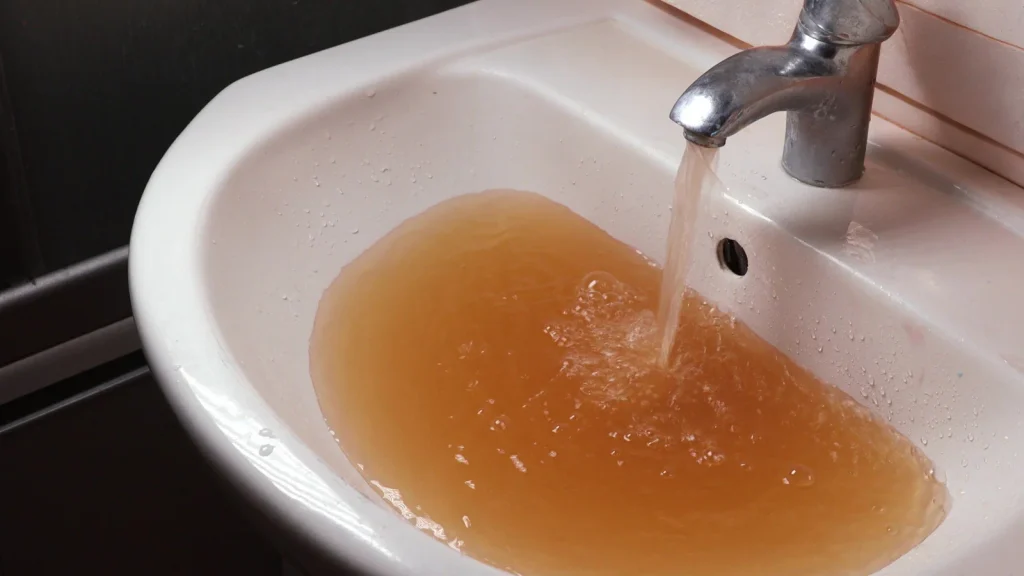
Because arsenic is completely odorless, tasteless, and colorless when dissolved in clear water, physical observation cannot reveal its presence. A glass of crystal-clear well water can carry concentrations that far exceed hazardous thresholds without displaying any visible precipitate or metallic aftertaste. Unraveling this hidden hazard requires an examination of bedrock mineralogy, subterranean redox states, chemical speciation, and the empirical frameworks that delineate safe exposure limits from long-term public health emergencies.
Geochemical Origins: How Arsenic Infiltrates Aquifers
Arsenic occurs naturally within Earth’s crust as the twentieth most abundant trace element, typically concentrated at an average background level of roughly two to three milligrams per kilogram. In undisturbed bedrock, it is locked within hundreds of distinct mineral phases, most prominently metal sulfides like arsenopyrite, realgar, and orpiment, or adsorbed onto oxidized iron, manganese, and aluminum complexes. Mobilization into drinking water happens when shifts in subterranean geochemical equilibrium dismantle these rock matrices.
Two primary geochemical mechanisms drive widespread aquifer leaching across diverse geographic regions:
- Reductive Dissolution of Iron Oxyhydroxides: In low-oxygen, organic-rich alluvial and deltaic basins—such as the Bengal Basin in South Asia, the Mekong River Delta, and parts of the American Midwest—burial of recent sediments triggers microbiological decomposition. Heterotrophic bacteria consume organic carbon and systematically exhaust dissolved oxygen, nitrate, and manganese before utilizing solid-phase iron(III) oxides as electron acceptors. As structural iron reduces to soluble iron(II), naturally adsorbed arsenic is liberated directly into pore water.
- Oxidative Dissolution of Sulfide Minerals: In arid and semi-arid inland terrains or areas subjected to intensive agricultural and municipal pumping, lowering groundwater tables introduce atmospheric oxygen into deep geological strata. Pyrite and arsenopyrite, historically stable under reducing conditions, react with oxygenated water to form sulfate, acidity, and free dissolved arsenic ions.
- Alkaline Desorption Pathways: In high-pH, closed-basin aquifers common to volcanic regions—including parts of the western United States, Mexico, and the Argentine Pampa—hydroxyl ions compete for binding sites on mineral surfaces, dislodging arsenic oxyanions through surface complexation displacement without requiring redox transformations.
Readers exploring broader hydrologic issues can consult our library of water quality blog articles for detailed breakdowns of aquifer vulnerabilities and regional geology across North America and beyond.
Arsenic Speciation: Inorganic Metalloids Versus Organic Complexes
Arsenic is not a uniform monolith; its toxicity, mobility, and treatability depend on its chemical speciation. In natural aqueous environments, arsenic transitions across four oxidation states: -3, 0, +3, and +5. In potable drinking supplies, inorganic oxyanions of trivalent arsenite and pentavalent arsenate dominate the aquatic chemistry.
Inorganic Arsenite [As(III)]
Arsenite functions as an uncharged, neutral molecule (primarily arsenious acid, H3AsO3) within ordinary drinking water pH ranges of 6.0 to 8.5. Because it lacks a net ionic charge under standard conditions, arsenite exhibits significantly weaker electrostatic interactions with mineral matrices and treatment media. Biologically, As(III) enters eukaryotic cells via aquaglyceroporin channels, demonstrating a high binding affinity for sulfhydryl (-SH) enzyme clusters, impairing cellular respiration, and disrupting fundamental mitochondrial pathways. Its uncharged nature renders it exceptionally challenging to extract via electrostatic filtration, membrane repulsion, or ion exchange.
Inorganic Arsenate [As(V)]
Arsenate (primarily H2AsO4– and HAsO42-) dominates oxygenated surface water and shallow, unconfined groundwater systems. As a negative oxyanion, arsenate behaves analogously to inorganic orthophosphate. This molecular resemblance enables it to bind vigorously to positively charged iron, aluminum, and titanium oxides, facilitating relatively straightforward filtration and precipitation. However, its similarity to phosphate also causes it to replace phosphate during glycolytic phosphorylation and DNA synthesis, uncoupling adenosine triphosphate (ATP) production and damaging genomic integrity.
Organic Arsenic Forms
Organic species such as monomethylarsonic acid (MMA), dimethylarsinic acid (DMA), arsenobetaine, and arsenocholine frequently appear in marine organisms and agricultural runoff where organic arsenical herbicides were historical staples. While synthesized organic complexes found in seafood generally pass through the human gastrointestinal tract without interacting lethally with metabolic pathways, the inorganic fractions found in mineral groundwater pose an immediate, systemic, and permanent health hazard upon chronic ingestion.
For more detailed background on how environmental toxicologists evaluate trace elemental interactions, review the NIEHS environmental health data on arsenic, which documents the cellular pathways through which inorganic metalloids exert their chronic effects.
Establishing Safe Limits: The Evolution of Global Standards
Public health authorities have steadily revised allowable arsenic levels downward over recent decades as epidemiological tools revealed adverse physiological impacts at progressively lower thresholds. For decades, the standard maximum permissible concentration was set at 50 parts per billion (ppb), which corresponds to 50 micrograms per liter (µg/L).
In 1993, the World Health Organization (WHO) lowered its provisional drinking water guideline value to 10 ppb, citing compelling evidence of internal organ carcinogenesis and cardiovascular damage from long-term exposures. In 2001, the United States Environmental Protection Agency (EPA) followed suit, establishing a federal Maximum Contaminant Level (MCL) of 10 µg/L, which took full legal effect for public municipal utilities in January 2006.
Despite this uniform federal ceiling, contemporary toxicological research has prompted several individual jurisdictions to enforce even more stringent regulations:
- New Jersey: In 2004, the New Jersey Department of Environmental Protection adopted a maximum drinking water standard of 5 µg/L, recognizing elevated cancer risks among lifelong well users in the Newark Basin.
- New Hampshire: After exhaustive state-level studies showed that nearly one in five private wells contained actionable arsenic, New Hampshire reduced its compliance threshold to 5 µg/L in 2020.
- Public Health Goals: Various scientific advisory boards, including California’s Office of Environmental Health Hazard Assessment (OEHHA), have established non-enforceable Public Health Goals as low as 0.004 ppb, demonstrating that theoretical zero-risk exposure levels exist far below modern municipal filtration capabilities.
For consumers seeking concise answers regarding local compliance standards and testing routines, our dedicated water testing and safety FAQ clarifies how municipal mandates intersect with individual household responsibilities.
Chronic Exposure Pathways and Health Implications
Acute arsenic poisoning from drinking water is exceedingly rare; the real danger lies in prolonged, low-dose chronic exposure stretching over years or decades. Ingestion of water containing elevated levels of inorganic arsenic leads to bioaccumulation across cellular tissues, with the body eliminating only a fraction through renal filtration. Property owners seeking precise contaminant verification frequently rely on where to test water for lead in the Bronx to identify potential risks before installing whole-house filtration.
Early dermal manifestations often represent the classic indicators of chronic exposure, commonly presenting as hyperpigmentation (spotted skin patches colloquially described as a “raindrop” pattern) and hyperkeratosis, where thick, hardened lesions develop across the palms of the hands and soles of the feet. Over extended timelines, these benign skin alterations can progress into squamous and basal cell carcinomas.
Beyond dermatological outcomes, chronic inorganic arsenic ingestion is definitively linked to internal malignancies, including urothelial carcinomas of the bladder, renal carcinomas, and pulmonary neoplasms. Vascular integrity is similarly compromised; vascular endotheliopathy induced by reactive oxygen species leads to peripheral arterial occlusive disorders (historically characterized in southwestern Taiwan as “blackfoot disease”), hypertension, ischemic heart disease, and carotid atherosclerosis. Furthermore, prenatal and early childhood exposures have been observed to impair neurocognitive development and elevate maternal health risks.
To examine how trace metalloids fit into the wider spectrum of groundwater contamination vectors, consult the NIEHS overview of environmental water pollutants.
Testing Methodologies: Finding the Invisible Contaminant
Public water systems undergo mandated testing regimens overseen by regional authorities, with results compiled annually in Consumer Confidence Reports (CCRs). However, the EPA’s Safe Drinking Water Act does not regulate private residential wells, leaving more than 40 million Americans entirely responsible for verifying the safety of their own tap water.
Field-based visual colorimetric test kits, while inexpensive, lack the analytical precision needed to measure concentrations near the 10 µg/L benchmark and can produce false negatives when arsenite compounds predominate. Accurate evaluation requires sampling protocols processed by accredited environmental laboratories utilizing advanced instrumentation:
- Inductively Coupled Plasma Mass Spectrometry (ICP-MS): Provides sub-part-per-billion detection limits and quantifies total elemental arsenic across varied geochemical backdrops.
- Hydride Generation Atomic Absorption Spectrometry (HG-AAS): Selectively converts arsenic oxyanions into gaseous arsine (AsH3) for isolated quantification, eliminating common ionic interferences.
- High-Performance Liquid Chromatography coupled with ICP-MS (HPLC-ICP-MS): Separates and accurately quantifies distinct arsenic species, distinguishing trivalent arsenite from pentavalent arsenate to inform targeted remediation designs.
When collecting samples for heavy metal assays, homeowners should preserve the water with concentrated trace-metal-grade nitric acid to keep metals suspended in solution prior to testing. Residents navigating varied urban and suburban water quality issues—ranging from well monitoring to identifying where to test water for lead in the Bronx or other metropolitan areas—must rely exclusively on state-certified environmental laboratories rather than unverified consumer strips.
For curated registries of certified testing laboratories and field sampling protocols, consult our repository of drinking water safety resources.
Engineered Remediation and Household Filtration Technologies
Boiling water does not eliminate arsenic. Because arsenic is a stable elemental metalloid with negligible volatility, boiling merely evaporates clean steam, concentrating the dissolved contaminants within the remaining liquid. Reliable remediation requires engineered physical separation, oxidation, or chemical sorption.
Pre-Oxidation: The Vital First Step
Because neutral arsenite [As(III)] passes largely unhindered through standard media beds, effective removal requires oxidizing it into charged arsenate [As(V)]. Pre-oxidation can be accomplished through the introduction of chlorine, potassium permanganate, ozone, or catalytic oxidizing filter media like manganese dioxide (e.g., Greensand or Birm). Once converted to As(V), electrostatic removal becomes significantly more efficient.
Point-of-Use and Point-of-Entry Technologies
Once arsenic is fully oxidized to pentavalent arsenate, several proven treatment technologies can reduce drinking water concentrations to safe levels:
- Reverse Osmosis (RO): High-pressure thin-film composite membranes physically reject multi-valent ions like arsenate with removal efficiencies frequently surpassing 95%. RO units installed under kitchen sinks provide a reliable, low-maintenance barrier for dedicated drinking and cooking outlets.
- Adsorptive Media (Iron-Based Hydroxides & Titanium Oxides): Granular ferric hydroxide (GFH) and hybrid titanium media possess an extraordinarily high affinity for arsenic oxyanions. As water flows through the media vessel, arsenate binds irreversibly via surface complexation. These systems are well suited for whole-house treatment because they do not waste reject water, though the media requires scheduled replacement once breakthrough capacity is reached.
- Strong Base Anion Exchange (SBA): Specialized anion resins exchange chloride ions for arsenate ions. However, competing anions—specifically sulfate and nitrate—can cause chromatographic displacement, where the resin unexpectedly unloads concentrated arsenic pulses if regeneration cycles are not strictly maintained.
- Coagulation-Microfiltration: Widely employed in municipal facilities, dosing with ferric chloride or alum destabilizes suspended colloids, creating iron hydroxide flocs that coprecipitate arsenic for subsequent mechanical filtration.
If you have received elevated laboratory test results and need assistance designing a verified multi-stage filtration system for your home, you can contact us to assess your water chemistry, review pre-oxidation requirements, and determine the ideal remediation equipment for your household.
Practical Takeaways for Safe Drinking Water
Managing the risks of geogenic arsenic requires ongoing vigilance, empirical verification, and tailored filtration engineering. By adopting a methodical approach, well owners and utility consumers can successfully protect their water supplies:
- Test Private Wells Annually: Groundwater tables fluctuate seasonally, altering bedrock contact times and subterranean redox chemistry. Conduct an annual heavy-metals panel through an accredited laboratory.
- Demand Speciation Profiles: If total arsenic exceeds 5 µg/L, request a speciation breakdown. Knowing whether As(III) or As(V) predominates determines whether pre-oxidation media is mandatory prior to adsorption or reverse osmosis filtration.
- Never Rely on Boiling or Pitcher Filters: Never boil water to address heavy metals, and verify whether carbon pitcher filters are independently certified to NSF/ANSI Standard 53 or 58 for arsenic reduction; standard charcoal pitchers do not remove inorganic metalloids.
- Maintain Treatment Hardware: Adsorptive media beds and reverse osmosis membranes experience finite lifespans. Install totalizing flow meters and schedule regular post-treatment testing to confirm that media beds have not reached saturation.
Arsenic remains a persistent natural challenge hidden beneath the surface, but with rigorous analytical testing, proper geochemical understanding, and verified treatment technologies, achieving clean, safe, and dependable drinking water is entirely within reach.